Every brand has a product worth talking about. The question is whether your audience ever sticks around long enough to hear the pitch. Static images and written descriptions can only do so much. A well-built video product-a repeatable, strategic video format designed around your product-does the heavy lifting that photos and copy simply can’t. This guide walks through exactly how to create product videos that drive real revenue, from the first creative spark to the final optimized cut across every channel that matters.
Key Takeaways
-
High quality product videos-demos, explainers, testimonials, and launch films-consistently boost sales, conversions, and time on page for both ecommerce and B2B brands. 89% of consumers say videos convinced them to make a purchase.
-
A good product video starts with strategy: a clear goal, a defined target audience, a focused key message, and a single strong call to action. Great footage without a plan is just expensive wallpaper.
-
There’s a concrete, repeatable process to make a product video: plan, script, storyboard, produce, edit, optimize, and distribute across web, social media platforms, and OTT/CTV.
-
Partnering with a specialist video production studio like Granite River Studios helps mid-sized and enterprise brands in Greater Boston and Southern New Hampshire create high converting product videos at scale-without reinventing the wheel each time.
-
Different video product types-explainer videos, demo videos, customer testimonial videos, and product launch video formats-should all align with one overarching marketing strategy to systematically boost sales across the funnel.
What Is a Video Product in Modern Marketing?
A video product isn’t just a single video you post and forget. It’s a strategic asset: a planned, repeatable format for product videos that can be produced consistently across campaigns, launches, and feature releases. Think of it as a system, not a one-off. Video products serve unique marketing and educational functions across the customer journey, and product videos highlight features and benefits of an item in ways that resonate with buyers at every stage.
Here’s the difference: a one-off product video solves one problem once. A scalable video product system gives your brand a plug-and-play toolkit for every new SKU, feature drop, or seasonal campaign. The formats that make up this system include:
-
30–60 second social cutdowns for feeds, stories, and reels
-
90–120 second hero explainer videos for homepages and landing pages
-
3–5 minute in-depth demo videos for product detail pages and sales decks
-
6–15 second performance ads for paid media and online ads
At Granite River Studios, we design these formats so they function as reusable templates for future products-consistent branding, motion graphics packages, and shot styles-reducing cost per video over time. That’s how you go from “we need a video” to “we have a video content engine.”
Why High Quality Product Videos Matter for Revenue
Let’s talk numbers, because this isn’t just a creative exercise. It’s a revenue play.
78% of people prefer learning about a product or service through video over any other content format. And the impact on purchase decisions is dramatic: shoppers who watch a product video are 2.5× more likely to begin a free trial or add to cart compared to those who only see product photos and text. Landing pages with embedded demo videos averaged a 4.8% conversion rate versus 2.9% without-a 65% lift just from including the video.
For ecommerce specifically, product videos can boost sales by 9.7% on Amazon. And broadly, 89% of consumers say videos convinced them to purchase a product or service.
Beyond direct conversion, a high converting product video reduces friction across your entire business:
-
Fewer support queries – buyers arrive better informed
-
Higher add-to-cart rates – confidence replaces hesitation
-
Better paid ad performance – video ads consistently outperform static images in CTR and CPA
-
Longer time on page – demo videos increase average session time by 2–3 minutes
Consider a scenario: a Boston-area DTC apparel brand adds 45-second product videos to their product pages-showing close ups of fabric texture, fit on real customers, and styling in context. Over three months, they see measurable lift in conversion. That’s not magic. That’s video doing what product images alone can’t: conveying texture, movement, and emotion simultaneously.
The Core Types of Product Videos You Should Be Creating
You don’t need 15 formats. Most brands win with three to four core video product types they can reliably repeat. Video types include product demos, explainer videos, and promotional advertisements-each serving a distinct purpose in the funnel.
-
Explainer videos – top of funnel, awareness and education. 38% of businesses used explainer videos in 2023, and that number keeps climbing.
-
Demo videos – mid to bottom of funnel, showing the product in action. 32% of businesses used product demo videos in 2023.
-
Customer testimonial videos – decision stage, building social proof with real customer feedback. Testimonial videos build trust by showcasing real customer feedback.
-
Product launch video / overview films – attention-generating content for new releases. Promotional videos generate excitement and drive brand awareness for new launches.
Different types of videos serve varying purposes including marketing and customer education. Beyond these core four, internal training videos onboard new employees and deliver educational content, event and recap videos summarize live events to drive future engagement, and webinars facilitate real-time audience interaction and thought leadership. But for product marketing, the four pillars above are where you start.
At Granite River Studios, we typically design a “video toolkit” around these pillars for each product or product line. Let’s dig into each.
Explainer Videos: Turning Complex Value into Clear Value
Explainer videos are 60–120 second videos that show what the product is, who it’s for, and why it matters-focusing on benefits over features. Explainer videos simplify complex products and boost purchase likelihood by 85%. That stat alone should make this format a priority.
Explainer videos use short summaries to clarify complex ideas for audiences. Videos simplify complex information for easier understanding. The ideal structure:
-
Hook in the first 3–5 seconds (a question, a bold claim, a visual surprise)
-
Problem statement – empathize with the viewer’s pain
-
Product solution – introduce your product or service as the answer
-
Proof – metrics, social proof, or a quick testimonial
-
Clear call to action – one CTA, not three
Animation is useful for abstract concepts and brand storytelling, which makes animated explainers especially powerful for SaaS or technical products. Picture a 90-second explainer produced for a Boston fintech startup: motion graphics walk through a complex financial workflow that would take five paragraphs to explain in text. On-screen text, brand-matched color grading, and a professional voiceover turn a confusing pitch into a compelling product marketing video.
Demo Videos: Showing How the Product Works Step by Step
A product demo video is a detailed walk-through-typically 2–5 minutes for B2B, 60–90 seconds for ecommerce-that “shows and tells” specific workflows or use cases. And here’s why they matter: 69% of consumers find product demos most helpful for purchase decisions.
Demo videos are often the most effective product video type for prospects close to purchase who want to see the product in action before committing. The visual approach depends on your specific product:
-
Software/SaaS: screen capture overlays, animated UI highlights, picture-in-picture of a presenter. Screencast videos are ideal for software demonstrations and support tasks.
-
Physical products: multi-camera close ups, showing close ups of materials, mechanisms, and real-world usage. Macro lens shots make details tangible.
-
Industrial/manufacturing: drone establishing shots for scale, then tight product detail shots.
Here’s a product video example: a 3-minute demo for a New Hampshire-manufactured industrial device, shot with macro lens and drone videography establishing the facility before diving into component-level detail. That combination of scale and precision gives potential customers exactly the confidence they need.
What Makes a Good Product Video “High Converting”?
High converting product videos are videos whose performance can be measured in concrete metrics: click-through rate, add-to-cart rate, demo requests, form fills. A great video that doesn’t move numbers is just a nice reel for your YouTube channel.
Product videos should be short and engaging to capture attention. Here’s the checklist:
|
Element |
Why It Matters |
|---|---|
|
Tight storytelling |
Viewers drop off when the narrative wanders |
|
Clear problem/solution framing |
Connects your product to a real need |
|
Strong call to action |
Without a clear CTA, viewers enjoy and leave |
|
Credible proof |
Testimonials, metrics, or demonstrations |
|
Platform-optimized format |
15s vertical for TikTok/Reels, 30s for CTV, 60–90s for product pages |
Common mistakes that kill conversions: no CTA, generic claims (“we’re the best!”), poor audio, confusing visuals, or trying to cram an entire pitch deck into a single video. Keep it focused. One video, one message, one clear call to action.
From Idea to Screen: How to Create a Product Video (Process)
This is the core step-by-step process we use at Granite River Studios with clients across Greater Boston and Southern New Hampshire to create product videos that deliver results.
-
Discovery & goals – Define what success looks like. Business goals can include brand awareness, lead generation, or customer education. Defining primary objectives is critical when choosing video products. Core evaluation factors include business goals and target audience.
-
Creative concept – Brainstorm innovative ideas, nail down the angle, determine tone and style.
-
Scripting & storyboarding – Lock the narrative before cameras roll.
-
Production planning – Location scouting, talent selection, props, lighting equipment setup, and permissions for drone work.
-
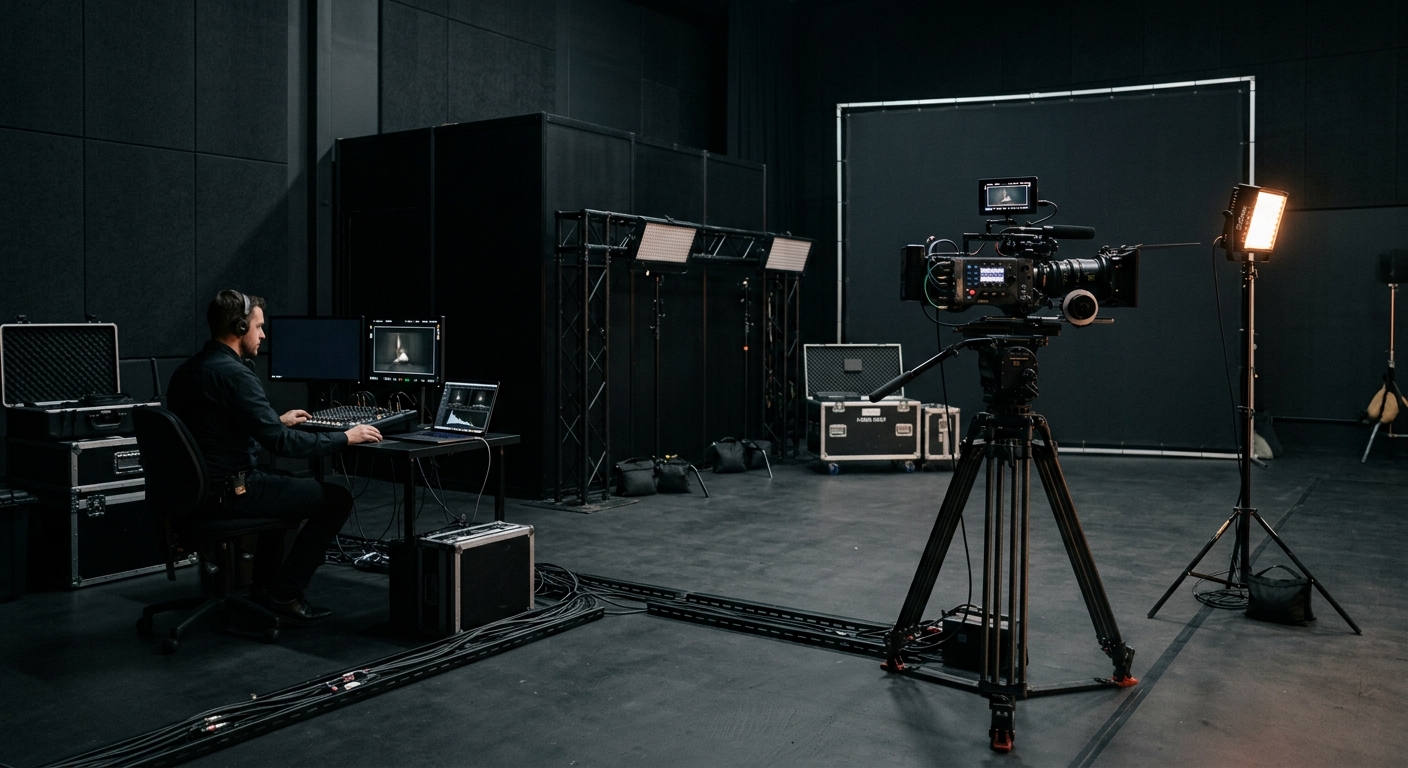
Shoot – Live action video is effective for demonstrating products and humanizing brands. Multi-camera, controlled lighting, clean audio capture.
-
Postproduction – Edit, color grade, sound mix, motion graphics. This is where a good product video becomes a great video.
-
Optimization & distribution – Format for every channel, add subtitles, build cutdowns, deploy.
Choosing a video product depends on specific business goals and team capabilities. Always start with why before picking up a camera.
Scriptwriting and Story Structure for an Effective Product Video
Even stunning product videos fail without a tight script. Words and structure come before cameras roll-every time.
Here’s a simple script template that works across formats:
-
Open with a hook – grab attention in 3–5 seconds
-
Empathize with the viewer’s problem – show you understand their world
-
Introduce the product – present it as the solution, not a list of the product’s features
-
Show proof – metrics, customer testimonials, or demonstration
-
Close with a direct call to action – tell them exactly what to do next
The target audience should inform video style and distribution channels. For a healthcare device, the tone is authoritative and precise. For DTC apparel, it’s playful and aspirational. Pull raw material from product pages, FAQs, and sales decks, then condense to a 150–250 word script for a 60–90 second product video. At Granite River Studios, we collaborate on script revisions and approvals so every word earns its place.
Production Quality: Visuals, Sound, and Motion Graphics
High quality visuals and audio are non-negotiable if you want viewers to trust your product. Blurry footage and bad sound don’t just look amateur-they actively hurt conversions.
Visual essentials:
-
4K capture as standard
-
Proper lighting equipment and multiple angles
-
Macro product shots and close ups for texture and detail
-
Drone videography for context (campuses, facilities, outdoor products)
Audio essentials:
-
Professional voiceover where the script calls for it
-
Clean lav or boom mics on-set
-
Licensed background music mixed to support-not overpower-dialogue
Motion graphics and animation:
-
On-screen callouts highlighting key features and video features
-
Animated UI overlays for software demos
-
Branded lower-thirds reinforcing benefits
-
Motion graphics convey complex data in an engaging manner
Live-action commercials are designed for broad-reach advertising campaigns, and professional postproduction ensures consistent, broadcast-ready output for TV, OTT/CTV, and web delivery. At Granite River Studios, in-house color grading and sound mixing keep everything polished from the first frame to the last.
Integrating Product Videos into Your Marketing Strategy
Even the most effective product video underperforms if it lives only on your website. It must be woven into a broader product marketing strategy across every relevant touchpoint. Integrating video products with existing tech stacks is essential for effectiveness.
Concrete placements to consider:
-
Ecommerce product pages and landing pages
-
Email nurture sequences
-
Paid social ads and online ads
-
Sales presentations and trade show loops
-
Your YouTube channel and social media platforms
Plan variants from the start: a hero explainer, short cutdowns, silent/subtitled versions for social feeds, and vertical crops for mobile-first marketing channels. 71% of customers trust companies that discuss social initiatives-so brand videos that establish brand identity and core values, and corporate videos that connect audiences to the company’s mission and culture, also belong in your mix.
Align video messaging with campaigns: seasonal promotions, upcoming product launches, and brand storytelling initiatives like a testimonial series. At Granite River Studios, we help clients map out a 3–6 month content calendar built around a core set of video products to systematically boost sales.
Optimizing, Testing, and Measuring Product Video Performance
Analytics and tracking are important for measuring video performance and ROI. Without measurement, you’re guessing. Here are the KPIs that matter:
-
View-through rate and watch time
-
Click-through rate on CTAs
-
Add-to-cart rate on pages featuring video
-
Lead form conversion from demo request videos
-
Sales lift compared to pages without video
Run simple A/B tests: different thumbnails, alternate opening hooks, varied CTAs (“Book a demo” vs. “Talk to sales”), and short versus longer runtimes. Use platform analytics-YouTube, Meta, TikTok, OTT dashboards-plus site analytics and heatmaps to understand where viewers drop off.
Treat your video product as a living asset. Update the edit when pricing, key features, or visual branding change. Don’t let your best-performing product marketing videos age out because a feature name changed six months ago. Granite River Studios provides versioning and ongoing postproduction support so brands can quickly test new CTAs or swap offers without full reshoots.
DIY vs. Partnering with a Professional Studio like Granite River Studios
There are scenarios where DIY makes sense: early-stage tests, quick social clips, simple how-tos shot on a phone with a free product video maker or basic editing software. User generated content from real customers can be powerful social proof, and you don’t always need a full crew for that. Any skill level can produce useful content when the stakes are low.
But when you need to create a product video that carries real weight-flagship product launches, broadcast or OTT campaigns, complex animation, multi-day or multi-location shoots-that’s when partnering with a studio pays for itself.
Granite River Studios brings creative direction, scripting, on-location and studio production, multi-camera setups, drone work, motion graphics, and full postproduction under one roof. We serve mid-sized to large brands and agencies in Greater Boston, Massachusetts and Southern New Hampshire that need high quality product videos at scale. Security measures for video content-including access control and encryption-are built into our delivery workflows for enterprise clients.
Ready to showcase your product the right way? Let’s talk about your next campaign.
Creating Product Videos at Scale Across Channels
For brands that need to create product videos for dozens of SKUs or frequent feature releases, a one-at-a-time approach doesn’t scale. You need a video product system.
That system includes:
-
Repeatable templates – consistent shot lists, lighting setups, and motion graphics packages
-
Predictable costs – no surprises when product #12 enters the pipeline
-
Repurposing workflows – turn one flagship explainer into short demo clips, vertical highlight reels, GIF-like loops, and social-first cuts
Short-form videos are optimized for social media and aim for rapid audience growth. But the same core footage, planned correctly, works across OTT/CTV, web, and social channels. Digital video ad spend hit $64 billion in 2024 and is projected at $72 billion in 2025, with CTV as one of the fastest-growing segments. Your own product videos need to be ready for those screens from day one.
At Granite River Studios, we plan for multiple aspect ratios and use cases from the outset. One shoot becomes a library-not a single deliverable. That’s how you create product videos at scale without blowing through your budget or sacrificing quality. Educational videos also help onboarding and reduce support requests through tutorials, meaning the content you create serves double duty internally and externally.
FAQ: Video Product and Product Video Strategy
How long does it typically take to create a product video with a studio?
For a fully produced product video-including scripting, storyboarding, shoot, and postproduction-expect a timeline of 4–6 weeks from kickoff to final delivery. Simpler edits, cutdowns from existing footage, or repurposed content can be turned around faster, often in 2–3 weeks if assets are ready and the scope is straightforward. Budget considerations for video include production and ongoing maintenance costs, so plan accordingly.
What budget range should a brand expect for a high quality product video?
For mid-sized and enterprise brands, a fully produced hero video with supporting cutdowns typically falls in the low five figures-roughly $8,000–$20,000+ depending on complexity, number of locations, talent, and animation needs. Simpler product demo video formats or software walkthroughs can come in at $1,000–$5,000. The key is matching investment to impact: a flagship product launch video justifies a larger budget than a quick social cutdown.
Can we reuse one product video for different channels like TV, CTV, and social?
Absolutely. The core footage can be reused, but it should be edited into multiple versions with different lengths, aspect ratios, and CTAs optimized for each channel. A 90-second hero explainer becomes a 30-second CTV spot, a 15-second vertical ad, and a silent/subtitled social clip. Plan for this at the shoot level and you’ll get maximum mileage from every frame.
How often should we update or refresh our product videos?
Review performance and content accuracy at least once per year. Update immediately when pricing, key features, or visual branding change significantly. Letting outdated product videos run erodes trust-especially when viewers see features or pricing that no longer match reality. Granite River Studios offers ongoing versioning support so refreshes don’t require full reshoots.
Do we need actors, or can we feature our own team and customers?
Many compelling product videos mix real team members and real customers with professional narration or light on-screen guidance. Authenticity builds trust, and testimonial videos featuring actual users often outperform scripted alternatives at the decision stage. Granite River Studios can coach non-actors on camera to get natural, confident performances-no drama school required. C’mon, your best sales story might already be sitting in your customer success team.