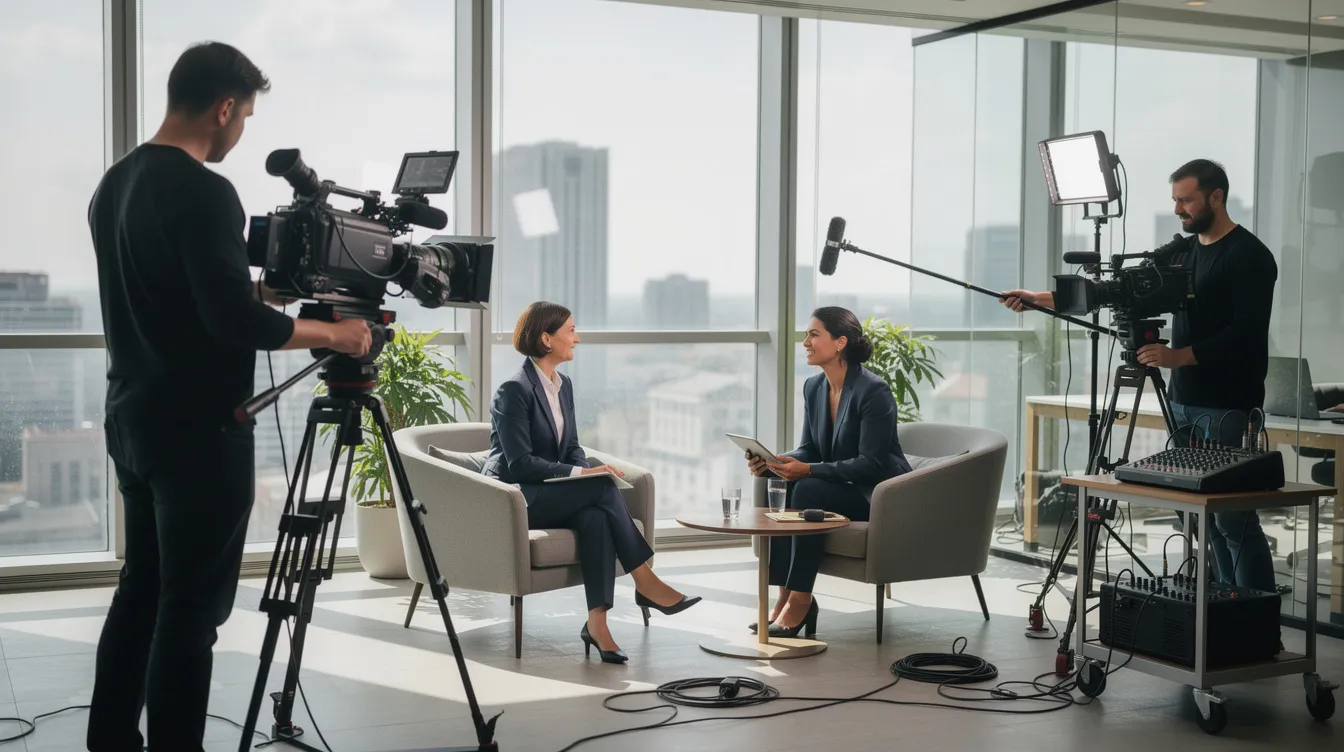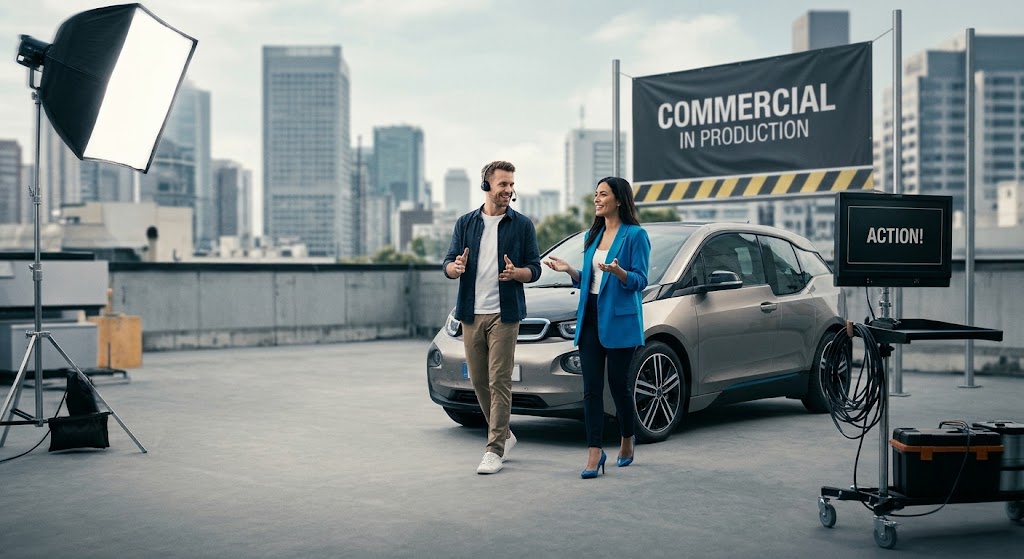

Everyone is going to use AI in production. The only question that matters is where. In artificial intelligence for video production, the best use is environments, settings, and conceptual elements—not realistic humans or faces, where trust drops, costs climb, and brand authenticity takes the hit. Here is the rule that keeps your budget and your audience’s trust.
Ken Dodge, Executive Producer, Granite River Studios
Last December, McDonald’s Netherlands put out a holiday spot made with generative AI. Hands that looked like balloon animals. Eyes a little too wide. Cookies on fire. It came down from YouTube three days after launch.
The backlash isn’t the part that should keep you up at night. The production notes are. The studio behind it said the film took seven weeks, ten AI and post specialists, and “thousands of takes.” Their CEO put it plainly: “AI didn’t make this film. We did.”
I believe them. Those are talented people. Seven weeks, ten specialists, thousands of takes, and the people on screen still didn’t quite look like people. The result had the usual AI-generated content problem: weak emotional depth, thin originality, and people who still didn’t quite look like people. That isn’t a talent problem. It’s a category problem. Generating humans is the hardest, slowest, most expensive and most trust-killing job you can hand AI. And it’s usually the first thing brands try.
If you’re a brand manager, an agency creative director, or a video production lead trying to work AI into the creative process without damaging authenticity, this is the part to get right. We’ll look at where AI helps, where it hurts, what the audience data says about AI in ads, how AI changes the budget, and how to use it strategically in production without turning a cost-saving tool into a credibility problem.
What your audience is telling you
• Trust falls as AI’s role grows. A Harris Poll UK study on the authenticity trade-off found 70% of people trust ads made entirely by humans. That drops to 40% when AI tools were used, and 20% when the ad was generated by AI alone.
• But they don’t hate AI everywhere. In the same study, 53% were fine with AI in backgrounds and conceptual elements. Acceptance craters where realism is the promise: 31% for food, 24% for beauty and skincare.
• Settings are fine. People are not. VCU News reports that using AI for scenes, but not people, may retain consumer trust. Researchers at VCU found AI-generated service providers hurt trust in an ad, while an AI-generated setting with a real person kept it. In other words: AI video production is usually acceptable when the AI is building the setting, and far riskier when the realism depends on a human face or body. Their summary: use AI for settings, not people.
• Real still wins. Getty Images VisualGPS research on building trust in the age of AI says 98% of consumers see authentic images and video as pivotal for trust.
The rule: fake the room, never the face
Put it on a sticky note. It works on almost every brief I’ve ever seen.
Where AI earns its keep: environments, weather, seasons, set extensions, the product in a place you can’t afford to fly to, concept frames, previs, and pre-production support with AI-powered tools or an AI-powered script generator that can turn rough ideas into a draft, support creative writing, suggest plot improvements, and help a team push through writer’s block before filming. Nobody has ever felt betrayed by a sky.
Where it costs you: people. Faces, hands on product, food on its way to a mouth, skin, testimonials. Anything where the viewer’s real question is “is this actually real?” because the promise depends on it. Deepfakes and misinformation risks live here too, along with the bigger concern that AI starts flattening creativity and originality right where human nuance matters most.
The gray zone: crowds in a wide shot, and stylized or animated work where nobody is pretending. Fine, as long as it’s clearly a style and not a disguise.
What it looks like on a budget
AI goes on the locations and set line. It never goes on the talent line. It can also streamline the production management process on the operations side, including scheduling and documentation.
That’s it. That’s the policy. The biggest cost savings usually come from automating repetitive editing tasks, and AI-powered editing can assemble rough cuts from raw footage quickly. If you’re a brand manager, you can get real savings out of the tools without becoming next December’s cautionary tale. It can also create multiple versions of video content automatically and repurpose them into short videos for social platforms. Ask your production partner one question before you sign: “Where is AI on this budget?” If the answer is the talent, keep shopping.
For our agency friends: leveraging AI tools
Every CD has been in the room when someone on the client side asks, “Can’t we just AI it?” Now you have a clean answer that doesn’t make you sound precious about craft or scared of the future: yes, the room. Not the face. Think text-based editing or video creation from text prompts and existing media. Your idea stays human where it counts, and the client still sees the savings. AI can absolutely support the creative process in pre-production, from rough ideas to script support, plus real-time transcripts and captions that make video editing faster and help deliver content. Automated captioning also improves accessibility and saves editing time. It can also automate subtitles and translation into multiple languages for distribution needs, but the final people-facing story still needs human creativity.
Why we like this rule so much
An LED volume is this rule built out of hardware. The world behind your talent is built. The person standing in front of it is real, lit by that world, captured in camera. Real face, any room you want. AI also helps in post by handling cleanup in visual effects, like removing unwanted objects or backgrounds. It can also improve video quality with upscaling and stabilization. For finishing, it can apply noise reduction, improve voice clarity, and help optimize color grading and sound design so editors can stay focused on creative work. And if a shot was missed, generative tools can create B-roll to bridge the gap. Nobody spends seven weeks arguing about hands.
Job displacement fears are real, and they are part of why this conversation gets heated, but they don’t change the basic production question of where AI adds value without eroding trust.
The short version
Stop asking whether to use AI. Everybody will. Decide where, before the first frame. Use it with guardrails, because AI systems can perpetuate biases present in their training data. Fake the room. Never the face. Behind the scenes, AI can streamline production workflows by replacing slow manual processes and automating metadata tagging with Object Recognition technology, generating metadata in seconds instead of hours to enhance metadata for better content discovery.
Got a 2027 brief where someone already said “can’t we just AI it?” Send it over. We’ll tell you which line it belongs on.