If you’re still treating streaming as “that thing millennials do,” it’s time for a wake-up call. CTV and OTT have blown past the tipping point. Streaming now accounts for nearly half of all U.S. TV watch time, and the ad dollars are following fast. Let’s break down what these terms actually mean, why they matter for your brand, and how to put them to work.
Key Takeaways
-
OTT refers to content streamed over the internet, while CTV is a device that streams OTT content-think of OTT as the how and connected TV as the where.
-
CTV advertising combines the big-screen, lean-back impact of traditional TV with digital advertising superpowers like data driven targeting, frequency control, and real-time optimization.
-
With 238 million CTV users in the US and streaming capturing nearly 49% of total TV viewing by mid-2026, brands relying only on linear TV are leaving reach and efficiency on the table.
-
The smartest advertising strategy blends CTV, OTT, linear TV, and other digital channels rather than treating any one as a silver bullet.
-
Launching a CTV/OTT campaign is more accessible than ever-even local businesses with modest budgets can see measurable results.
OTT vs. CTV: Definitions and Core Differences
Here’s the simplest way to think about it: OTT and CTV differ in one core way: OTT is the delivery method, CTV is the device. OTT describes how video content delivery happens (over the internet, bypassing traditional cable). CTV describes where it’s watched (on a television screen connected to the internet).
All CTV is OTT, but not all OTT is CTV. Watching Netflix on your phone? That’s OTT but not CTV. Watching Netflix on a Samsung smart TV? That’s both CTV and OTT, and it feels closer to watching TV on a traditional set even though the content is streamed.
-
OTT (over the top): any video content streamed via the internet-viewable on phones, tablets, laptops, desktop computers, and connected TVs. OTT offers greater flexibility compared to traditional cable TV because content is available on-demand, allowing users to watch anytime on multiple devices.
-
CTV (connected TV): internet connected devices that are specifically TV screens-smart TVs from Samsung, LG, and Vizio, plus streaming devices like Roku, Amazon Fire Stick, Fire TV, Apple TV, Chromecast, and gaming consoles like Xbox and PlayStation.
-
Linear TV: scheduled programming delivered by cable, satellite providers, or broadcast networks via set-top boxes. Linear TV refers to appointment-style viewing with limited targeting and interactivity.
The key distinction? OTT supports viewing on phones, tablets, laptops, and TVs. CTV specifically refers to the big-screen experience where streaming content meets the living room.
What Is OTT in Practice?
OTT content is everywhere you stream. Netflix, Disney+, Hulu, Max (formerly HBO Max), Amazon Prime Video, YouTube, Paramount+-these are all OTT services delivering video content over the internet without requiring a cable subscription. Streaming platforms often offer larger libraries of content than traditional cable, and viewers can choose specific streaming services instead of rigid cable bundles.
OTT content can be live (sports on YouTube TV or Hulu + Live TV) or on demand (binge-watching a series, browsing movie catalogs, or tuning into FAST channels like Tubi or Pluto TV). OTT content also provides personalized recommendations based on viewing history, keeping viewers engaged across sessions.
-
Where OTT runs: mobile devices (iOS/Android apps), tablets, web browsers on desktop devices and laptops, and apps on CTV devices
-
Business models: SVOD (Netflix, Disney+ premium), AVOD or ad supported video on demand (Tubi, Pluto TV, The Roku Channel with 117 million AVOD viewers in the US), and hybrid ad supported tiers (Netflix’s ad tier, Prime Video’s ad tier, Disney+ with ads)
-
Advertiser takeaway: OTT means cross-device reach beyond the living room-streaming services often offer ad-supported options or subscription tiers, giving media buyers access to streaming audiences wherever they watch
OTT can be viewed on multiple devices including smartphones and tablets, which means OTT allows precision targeting for individual users across personal devices-not just households.
What Is Connected TV (CTV)?
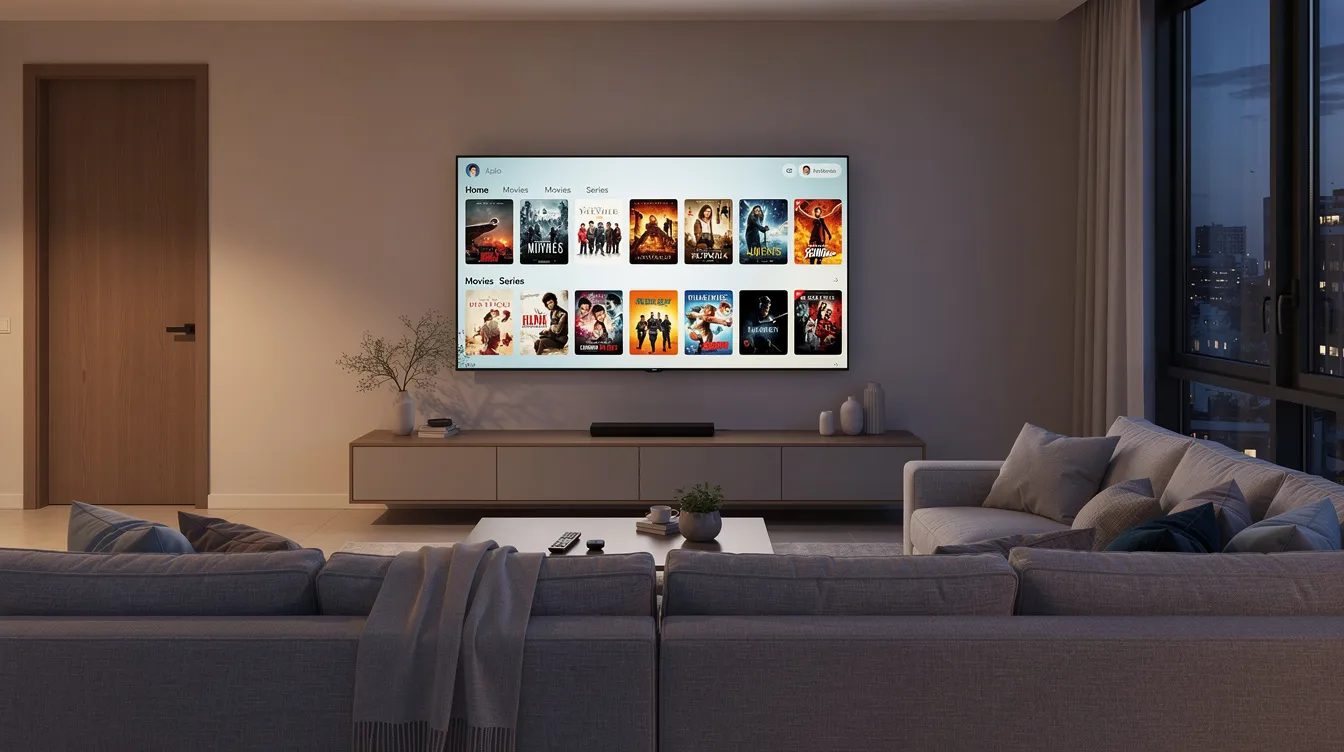
CTV refers to TV screens connected to the internet-either natively through smart TVs or via external streaming sticks and streaming devices. Think Roku, Fire TV, Apple TV, Chromecast, and yes, gaming consoles that many households use primarily for streaming.
-
How it works: CTV devices access OTT apps (Netflix, Hulu, YouTube, Peacock) through built-in app stores or device interfaces-navigated with a remote, voice control, or controller
-
Smart TV operating systems: Roku TV, Google TV, Samsung Tizen, LG webOS, Vizio SmartCast-these are televisions connected to the internet right out of the box
-
The experience: lean-back, big-screen, sound-on viewing-family movie night, live sports, reality TV binges, news in the living room
-
Smart TV penetration is 70.6% among U.S. TV homes, meaning the majority of American households already own a CTV-capable television screen
CTV advertising targets the big-screen TV viewing experience. When advertisers talk about CTV ads, they mean video ads appearing on TV screens-not on mobile or desktop. That distinction matters because the viewing context (co-viewing, full attention, premium content) is fundamentally different from scrolling on a phone.
CTV, OTT, and Linear TV: How They Fit Together
Remember when the cable bundle was king? Early 2000s, most households watched linear TV through cable or satellite. Then broadband got fast, smart TVs got cheap, and streaming TV changed everything. But here’s the thing-linear TV isn’t dead. It’s just sharing the stage.
Linear TV refers to scheduled programming on traditional cable, satellite, or broadcast. Many of these channels now also stream via vMVPDs like YouTube TV, Hulu + Live TV, Sling TV, and Fubo-often watched through CTV devices. The lines keep blurring.
-
Cord cutters: households that canceled cable and went all-in on streaming
-
Cord nevers: younger audience segments that never subscribed to pay TV at all
-
Heavy linear viewers: often older demographics who still rely on traditional TV for news, sports, and appointment viewing
From an advertising strategy standpoint, both CTV and OTT don’t fully replace linear TV-they add incremental reach, digital controls, and precision that traditional TV advertising simply can’t match. The smartest media buyers treat connected tv advertising as a complement to linear, not a replacement.
Market Growth and Adoption of CTV and OTT
Between 2020 and 2026, CTV and OTT went from “emerging channel” to “table stakes” in media plans. The numbers are wild, and they keep climbing.
By mid-2026, streaming accounted for roughly 48.6% of total U.S. TV watch time, surpassing broadcast and cable combined. According to a 2025 Pew Research report, 83% of U.S. adults use streaming services. That’s not a niche-that’s the mainstream.
-
There are 238 million CTV users in the US-nearly 70% of the population. The reach of CTV devices in the U.S. has jumped to 75% of households.
-
CTV ad spending in the US reached over $33 billion, and CTV advertising spending will exceed $40 billion by 2027.
-
Ad-supported streaming services have 117 million viewers in the US, fueling AVOD and FAST channel growth.
-
CTV users will spend nearly 3.5 hours watching content this year on average.
-
U.S. CTV ad spend is projected at $30–38 billion in 2026 depending on definition, growing 11–15% year over year.
-
For the first time in 2026, CTV upfront commitments exceeded primetime linear TV upfront commitments-a historic shift.
-
International markets including the U.K., Australia, and Western Europe are following similar OTT CTV growth patterns.
CTV advertising targets 238 million users in the US, and 70% of CTV advertisers plan to increase their spend by an average of 17% in 2026.
How CTV and OTT Advertising Work
Think of CTV and OTT advertising as digital advertising that happens to look and feel like TV commercials-but with way better tools under the hood. OTT advertising uses programmatic technology for audience targeting, and CTV ads deliver ads directly on TV screens within streaming content.
-
CTV ad placements: full-screen pre-roll, mid roll ads, and post-roll video within streaming content; pause ads; home screen and screensaver placements; interactive formats including QR code overlays
-
OTT advertising across all screens: pre-roll and mid-roll in mobile and desktop video players, vertical video in apps, companion banners, and display overlays
-
Common ad formats: 15–30 second non-skippable video, interactive ads with QR codes, shoppable ads, sequential storytelling across multiple devices
-
Buying methods: direct IOs with major networks and streaming platforms, private marketplaces, programmatic guaranteed deals, and open exchanges for scale
Digital streaming analytics provide detailed metrics on ad completion rates and engagement. Modern platforms can unify connected tv advertising with other digital channels for cross-channel frequency management. CTV ads provide real-time performance tracking for better optimization-something traditional TV advertising never offered.
Key Advantages of CTV and OTT for Advertisers
CTV and OTT sit at the intersection of TV’s storytelling power and digital advertising’s measurement precision. That combination is genuinely exciting for brands-and here’s why.
-
Big-screen impact: CTV delivers immersive, sound-on, full-screen viewing comparable to traditional TV but on streaming TV platforms where premium inventory lives
-
Data driven targeting: use advanced targeting to reach your target audience with demographics, interests, browsing behavior, location data, and even specific demographics by ZIP code or DMA
-
Frequency control and reach extension: identify households underexposed to linear TV campaigns, add incremental reach, and cap frequency at the household level to reduce waste
-
Richer measurement: CTV provides detailed metrics on viewer engagement and retention-completion rates, brand recall, website traffic, app installs, and conversions tied to exposure via pixels or clean rooms
-
Brand-safe environments: premium content from well-known streaming platforms and major networks, curated AVOD/FAST channels-far less risk than open web video
-
Cost efficiency: while CPMs can be higher, cost per outcome is often superior. CTV allows real-time performance tracking for better campaign optimization, reducing wasted spend
Real-world results back this up. Blu Dot, a furniture brand, achieved over 2,308% ROAS through Roku’s CTV platform. Under Armour hit a 99% video completion rate and $4.18 ROAS via connected tv advertising paired with clean room measurement.
Ad Formats and Creative Best Practices on CTV and OTT
Getting the format and creative right can make or break your CTV campaigns. Here’s what works.
CTV ad formats on TV screens:
-
Full-screen instream video (15–30 seconds), typically non-skippable
-
Mid roll ads during long-form streaming content
-
Interactive overlays with QR codes or voice prompts
-
Pause ads and home screen tiles on smart TV platforms
-
Shoppable ads that let viewers act during an ad break
OTT ad formats beyond CTV (mobile and desktop devices):
-
Pre-roll and mid-roll in mobile/desktop video players
-
Vertical video in streaming apps
-
Banner overlays and companion ads alongside the player
Creative tips:
-
Capture attention in the first 3 seconds-brand and logo upfront
-
Design for sound-on, big-screen environments
-
Include a clear CTA that works from the couch: QR code, short URL, or memorable phrase leading to landing pages
-
Test multiple lengths (15s and 30s) and use campaign metrics to determine what drives the best brand recall
-
Keep messaging consistent across CTV and mobile OTT so the target audience recognizes your ad on any screen
Data-Driven Targeting, Measurement, and Optimization
Data driven targeting is the main differentiator between CTV advertising and traditional TV advertising. It’s why performance-focused brands are moving budgets to streaming advertising.
Targeting methods on CTV and OTT:
-
Demographic audience segments (age, gender), geo-targeting down to ZIP or DMA
-
Interest and behavioral audiences, contextual targeting by content genre
-
Retargeting based on previous exposure or site visits
-
First-party data (CRM lists, website visitors) matched via privacy-compliant household identifiers or clean rooms
Key metrics to monitor:
-
Impressions, unique reach, frequency, video completion rate
-
Cost per completed view, website traffic after exposure, app installs
-
Downstream conversions, ROAS, and multi touch attribution models
Optimization levers to optimize campaigns:
-
Shift budget between publishers and streaming platforms based on performance
-
A/B test different creatives and ad lengths
-
Adjust dayparting and frequency caps across CTV devices
-
Refine audience segments based on mid-campaign data
OTT allows precision targeting for individual users across personal devices, while CTV focuses targeting at the household or television screen level. Privacy changes are pushing the industry toward aggregated, contextual, and household-level models, but advertisers can still use modeled insights and clean rooms for reliable measurement.
Integrating CTV and OTT into Your Advertising Strategy
Don’t treat CTV connected TV as a silo. It’s one powerful channel within a broader omnichannel strategy-and it plays best with others.
Prioritize CTV when:
-
Big-screen storytelling matters (launches, tentpole events, live sports)
-
You’re running national or regional brand campaigns
-
You want to reach high-value households watching streaming content on premium inventory
Lean on broader OTT (mobile and desktop) when:
-
Reaching younger, mobile-first streaming audiences
-
Reinforcing messages seen on CTV via additional touchpoints
-
Running upper-funnel awareness at scale across multiple streaming platforms
Balance your budget:
-
Pair CTV with search, social, and display for retargeting viewers who saw your ad during an ad break
-
Use cross-channel reporting to identify overlap between linear TV and CTV reach
-
Start with a pilot budget, measure campaign performance, then scale what works across digital channels
Whether you’re a DTC brand, a local healthcare practice, or an auto dealership-connected tv advertising has a place in your plan. One Tampa dealership ran CTV on just $2,500/month and saw showroom visits increase 34% with cost per vehicle sold dropping from $150 to $108.
Steps to Launch a CTV/OTT Campaign
Ready to jump in? Here’s your step-by-step playbook.
-
Define campaign goals: awareness (reach, completed views), consideration (site visits, engagement), or performance (leads, sales). Attach KPIs to each goal.
-
Select your target audience: demographics, geography, household type. Decide on first-party data vs. third-party audience segments. Consider both CTV viewers on TV screens and OTT viewers on mobile devices.
-
Choose inventory and publishers: mix premium streaming platforms with AVOD/FAST channels. Ensure brand safety. Decide between programmatic and direct buys based on budget and campaign goals.
-
Prepare creative assets: big-screen-friendly video (correct aspect ratios, sound-on mix), brand identity within the first 3 seconds, clear CTAs (QR codes, vanity URLs). Create cut-downs for OTT ads on mobile.
-
Set up tracking: implement pixels or server-side tracking before launch, ensure privacy compliance, agree on attribution methodology including multi touch attribution models.
-
Launch and optimize: start with a pilot phase. Review campaign performance weekly. A/B test creatives, refine targeting, adjust frequency caps, shift budget toward top-performing placements. Coordinate with other digital channels for a unified view.
FAQ: CTV and OTT Advertising
These FAQs tackle the practical questions that come up most when brands explore CTV and OTT advertising for the first time.
Is CTV more expensive than traditional linear TV?
CPMs for CTV are often higher than broad linear TV buys, but that comparison misses the point. CTV campaigns deliver ads to specific audience segments rather than blanketing every viewer of a timeslot. Effective costs per outcome-cost per completed view, cost per site visit-can be significantly lower when data driven targeting and optimization are in play. You’re paying more per impression but wasting far less.
How long should CTV ads be for best performance?
The sweet spot is 15 and 30 seconds. Fifteen-second spots tend to deliver strong completion rates and work well for simple messages. Thirty-second ads are better for complex storytelling or emotional brand recall. Test multiple lengths where inventory allows, and let your campaign metrics guide which duration delivers for each objective.
Can small or local businesses benefit from CTV and OTT advertising?
Absolutely. CTV and OTT aren’t just for national brands. Local advertisers can target specific demographics by geography (city, ZIP code, DMA) and household characteristics, making even modest budgets efficient. Start with tightly defined geographic and audience segments, measure results, and expand from there.
How do I avoid showing the same CTV ad too many times to the same household?
Use frequency caps managed through a centralized platform that recognizes exposures at the household or device level. Rotate multiple creatives to keep things fresh, and coordinate with your other digital channels (online video, display) so you’re not hammering the same viewers across every screen.
What role will privacy regulations play in future CTV and OTT advertising?
Tightening privacy rules and the deprecation of certain identifiers are pushing the industry toward aggregated, household-level, and contextual targeting models. The good news: privacy-safe data partnerships, clean rooms, and transparent consent practices still allow effective targeting and measurement. The approach is shifting, but the capability isn’t going away-it’s just getting smarter.