Introduction
Video ads are paid promotional video content distributed across digital platforms, social media feeds, streaming services, and publisher sites to reach a defined target audience. They range from 6-second bumper ads to 3-minute product demos, appearing before, during, or alongside other videos and web content. Video advertising is effective in digital marketing because it combines motion, sound, and narrative in ways that static formats cannot match.
This guide covers video ad types, creation strategies, platform optimization, and performance measurement to help businesses of all sizes support specific business goals. It does not cover organic video strategy or influencer marketing outside paid placements. Whether you run an ecommerce brand testing TikTok campaigns or a B2B company exploring LinkedIn video, the material here applies to your planning and execution.
Video ads are short promotional videos (typically 6 seconds to 3 minutes) that appear before, during, or alongside digital content to drive awareness, engagement, and conversions. Video ads are versatile formats that can build awareness, educate customers, promote a product or service, generate leads, and drive sales. They drive measurable results across the marketing funnel, from first impression to final purchase.
After reading this guide, you will be able to:
-
Identify the right video format for each stage of your marketing funnel
-
Create high-converting video content optimized for specific platforms
-
Compare costs and benchmarks across YouTube, Meta, TikTok, and LinkedIn
-
Measure campaign success using the correct KPIs for each objective
-
Avoid the production, placement, and creative mistakes that drain budget
Understanding Video Advertising Fundamentals
Video advertising refers to paid video content designed to promote products, services, or brands across digital channels. These ads appear in streams, feeds, apps, and websites, targeted by demographics, interests, or behavior. In 2026, 91% of businesses globally use video marketing, and video accounts for roughly 82.5% of all internet traffic. For ecommerce campaigns in Q4 2025, video ads drove 2.1x higher engagement rates and 34% lower cost-per-acquisition than static images, according to MHI Growth Engine. Video ads outperform static formats for engagement and brand recall.
Core Video Ad Components
Three elements form the foundation of every video ad:
Visual storytelling captures attention and communicates the brand message without relying on audio. The first 3 seconds of a Meta video ad account for about 47% of total ad value. Hook viewers in the first 3 seconds to retain attention; this window determines whether someone watches or scrolls past. Effective video ads should capture attention immediately and keep the focus on one clear message.
Audio elements include voiceover, music, and sound effects. They reinforce the visual narrative but cannot carry it alone: 75% of mobile video is watched with sound off. Design video ads for sound-off viewing by using captions and visual storytelling.
Call-to-action integration guides the viewer on the next steps to take. A single call-to-action works better than multiple competing prompts. Keep on-screen points short, with 3-5 words visible at a time. Different formats allow clickable overlays, end cards, or swipe-up actions depending on the platform.
Video Ad Placement Models: Pre Roll
Video ads include in-stream, bumper, and outstream formats, each suited to different objectives and selected with targeting in mind for the audience you need to reach.
In-stream placements insert ads before (pre roll), during (mid roll), or after (post roll) other videos. In-stream ads can appear before, during, or after videos. Non-skippable pre-roll ads reach roughly 92% completion and deliver +68% brand recall lift. Skippable pre-roll averages about 29% completion with +42% recall. You can reach people through in-stream placements on YouTube and across Google Video Partners, which extend your ads to publisher sites, apps, and other videos.
Out-stream ads appear within news articles or mobile apps and autoplay when visible. They sit outside traditional video players, expanding your reach beyond dedicated video platforms.
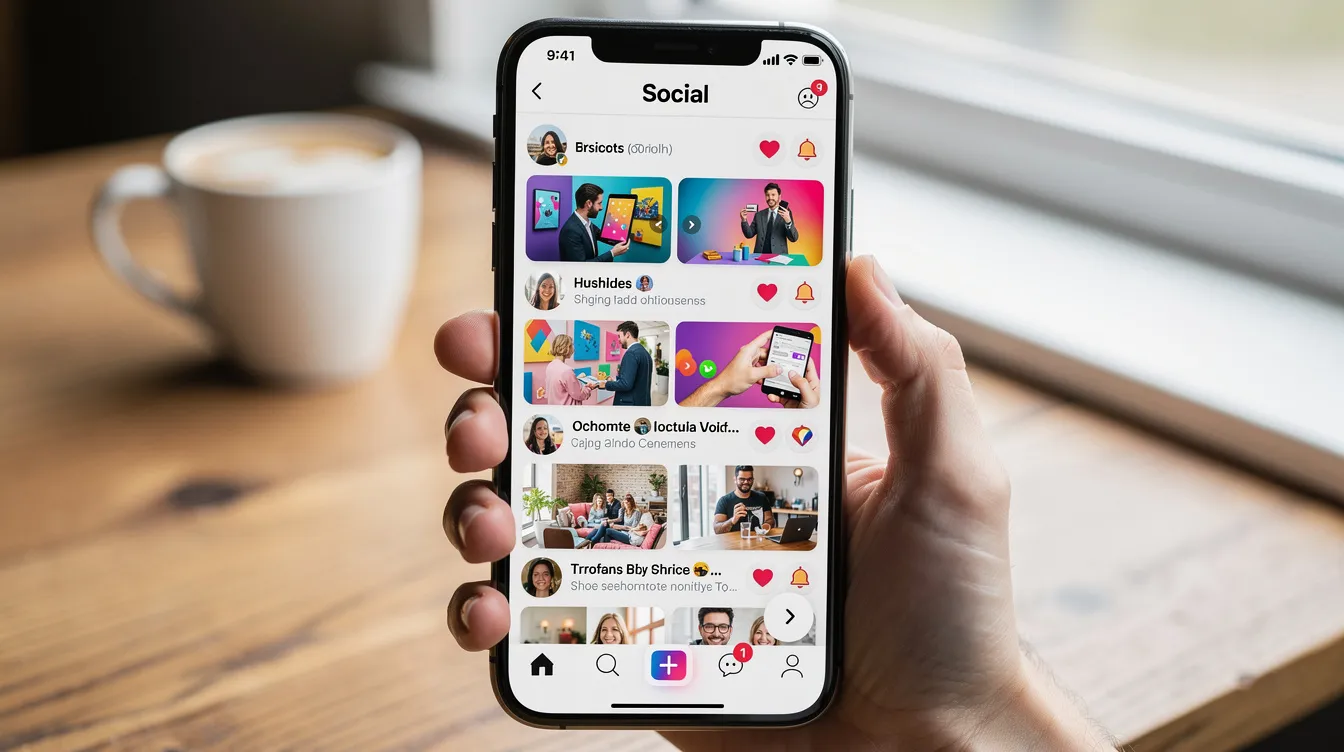
Native video placements integrate seamlessly into a publisher’s content. Social media ads appear in feeds, Stories, or Reels on platforms like Instagram and TikTok, looking and feeling like organic content users already watch.
Placement choice directly affects cost, performance, and downstream measurement such as branded search lift. Non-skippable in-stream delivers a lasting impression through forced completion, while in-feed native video earns a 3.26% CTR but only 34% completion. Choosing the right placement makes more sense when you understand which formats support each placement model.
Types and Formats of Video Ads
Different formats of video ads target various stages of the marketing funnel. Tailoring the video format to the marketing funnel improves advertising effectiveness: top-of-funnel awareness uses unskippable or broad brand videos to capture attention quickly, mid-funnel consideration involves educating prospects on specific features using demos, and bottom-of-funnel conversion targets users with tailored video incentives or direct response ads.
Short-Form Video Ads
Bumper ads are 6 seconds long and non-skippable, built for brand recall when you need to build awareness with a concise message. YouTube bumper ads play before other videos and work well when paired with longer formats in the same campaign.
On TikTok, in-feed ads run 5 to 60 seconds at 1080×1920 resolution (9:16), encoded as MP4 or MOV at 8-12 Mbps, with a maximum file size around 500 MB. Spark Ads and TopView formats let you showcase products using content that mirrors organic TikTok behavior.
Instagram Reels ads run 3 to 90 seconds in vertical 9:16 at 1080×1920 resolution, H.264 codec, 8-10 Mbps bitrate, with files up to 4 GB. Social media native ads include formats like Reels and Stories, designed to blend with the platform’s content feed.
Shorter video ads tend to perform better for initial brand awareness. Short-form formats under 60 seconds earn 5.2% engagement versus 3.1% for mid-form content. 15 seconds is the optimal length for most video ads when the goal is reach. 73% of consumers prefer short-form video for product discovery.
Long-Form Video Ads
YouTube supports both skippable and non-skippable pre-roll, mid-roll, and post-roll ads. Skippable pre-rolls average a 1.84% CTR and $0.03-$0.09 CPV; non-skippable pre-rolls average 1.52% CTR and $0.07-$0.16 CPV but deliver that 92% completion rate. YouTube Shorts ads provide another avenue for vertical short-form alongside traditional horizontal formats. YouTube recommends uploading at minimum 1080p resolution (uploading 4K triggers better codec assignment via AV1 or VP9), with maximum file sizes up to 256 GB.
Connected TV and streaming platforms represent the fastest-growing segment of video advertising, with 35% year-over-year spend growth. CTV ads are typically non-skippable, achieving roughly 95% completion rates and +72% brand recall lift. CTR sits lower at about 0.78%, but the quality of attention on a large screen viewing experience compensates. Video ads can increase brand recall when placed in these high-completion environments.
Interactive Video Ads
Shoppable video ads let viewers tap products within the video to explore and purchase, collapsing the gap between awareness and conversion. 360-degree and immersive video formats hand control to the viewer, making more sense for experiential campaigns in travel, real estate, or automotive, and strong concepts can keep viewers fascinated rather than simply clicking around.
Augmented reality video experiences overlay virtual elements onto real-world camera views. Beauty and fashion brands use AR try-on ads to let customers see products on themselves before buying.
When to use each format: shorts ads and bumper ads for broad reach at low CPV; mid-form (1-5 minutes) for product demos and education; non-skippable pre-roll or CTV for recall-focused campaigns; shoppable or interactive for direct conversion. Match your creative strategy to the funnel stage, not the platform default.
Creating High-Converting Video Ads
Knowing which formats exist is the first step. Translating that knowledge into ads that convert requires a structured production process and platform-specific optimization.
Video Ad Production Process
1. Script development and storyboard creation. Align your script to one clear message about the product or service and your brand’s value proposition. Real person content tends to engage viewers more than overly polished commercials. A/B tests across Meta and TikTok show UGC-style talking heads and founder-led content outperforming studio-produced ads by 3-5x on multiple metrics. Plan the hook for the first 3 seconds; this is where you earn or lose the viewer’s attention.
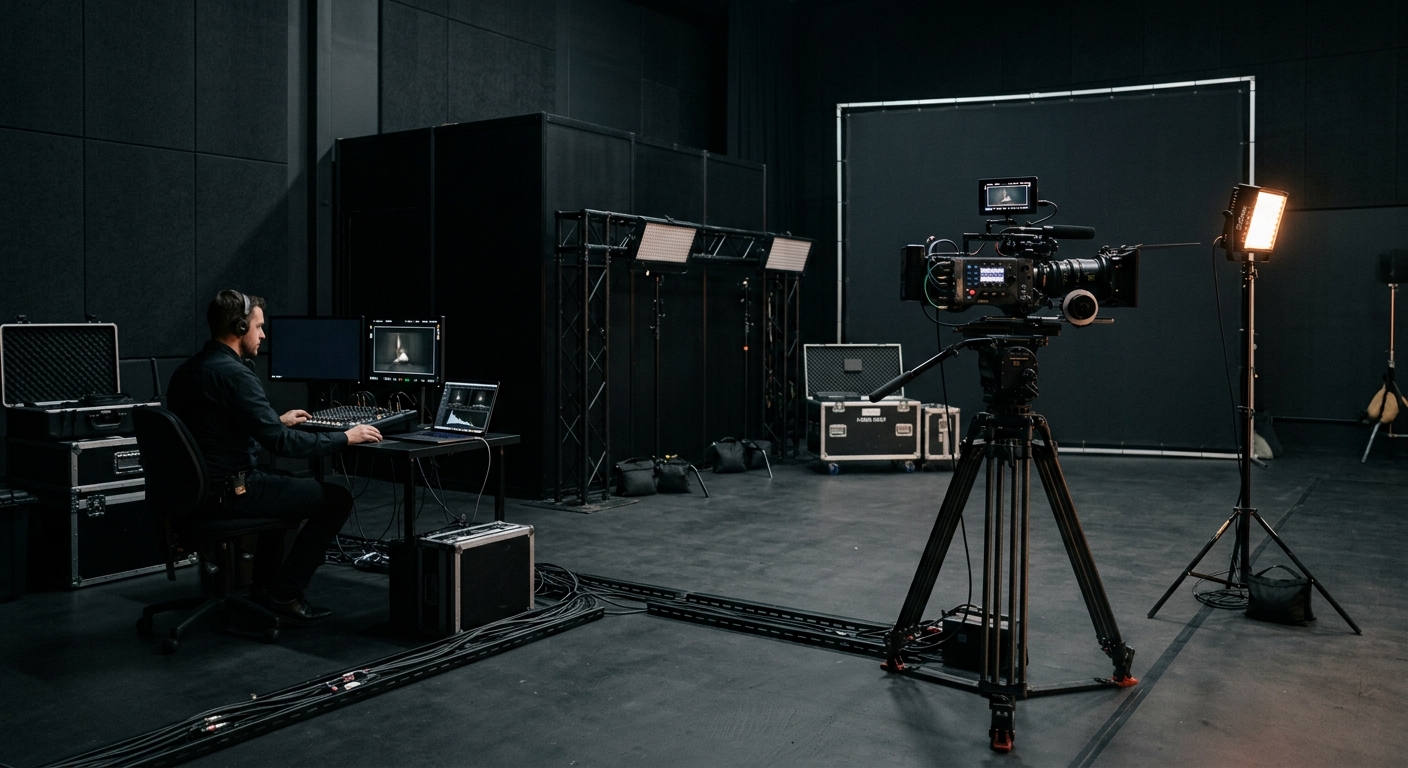
2. Filming or animation production. Match your aspect ratio to the placement: vertical 9:16 for Reels, TikTok, and Stories; square 1:1 or 4:5 for Facebook and Instagram feed; horizontal 16:9 for YouTube long-form and CTV. Use proper lighting and stable footage. Even smartphone-shot content performs well when the image is clear and the framing is intentional.
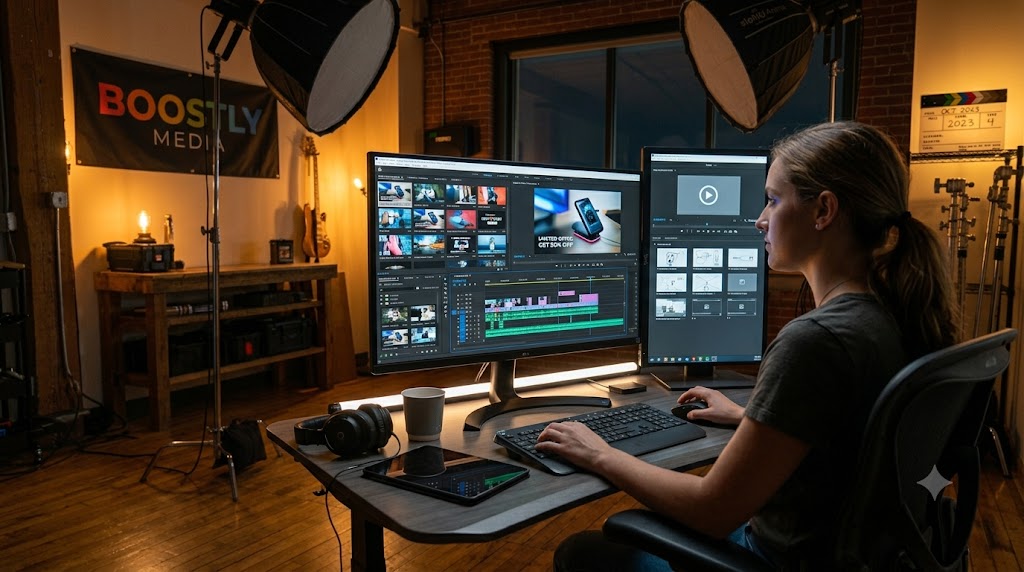
3. Post-production editing. Add captions and text overlays for sound-off viewing. Layer graphics and CTAs in safe zones (avoiding areas where platform UI elements appear). Keep the pace quick; fast edits and motion hold attention on mobile video. Ensure audio clarity for users who do have sound on.
4. A/B testing before full launch. Testing different versions with a production or agency partner can impact performance by double-digit percentages. Vary the hook, length, style (UGC vs. polished), and CTA placement. On Meta, dynamic creative tends to last a median of about 33 days before fatigue sets in, compared to roughly 66 days for other formats. Refresh schedules matter.
Platform Optimization Comparison
|
Platform |
Aspect Ratios |
Duration |
Codec / Bitrate |
Max File Size |
|---|---|---|---|---|
|
TikTok |
9:16, 1:1, 16:9 |
5-60 sec (up to 10 min for some) |
H.264; 8-12 Mbps; MP4/MOV |
~500 MB |
|
Instagram Reels |
9:16 |
3-90 sec |
H.264/AAC; 8-10 Mbps; 30 fps |
4 GB |
|
YouTube |
16:9 (also vertical/square) |
Varies; Shorts ≤60 sec |
720p min; upload 4K for AV1/VP9 |
256 GB |
|
Meta Feed |
1:1 or 4:5 (Feed); 9:16 (Stories/Reels) |
Feed up to 241 min; Reels/Stories up to 120 sec |
H.264/AAC |
4 GB |
|
|
1:1, 16:9, 9:16 |
3 sec to 30 min |
H.264; MP4 |
200 MB |
Video ads can target audiences on every platform listed above using demographics, interests, behaviors, job titles, and lookalike or similar audiences. LinkedIn CPMs range from $32-$58 and CPCs from $5.20-$9.80, reflecting higher-value B2B audiences. TikTok CPMs run $6.80-$12.40 with CPCs around $0.60-$1.40. Meta CPMs sit at $10.50-$16.80 with CPCs of $0.80-$1.60. Your budget and target audience determine which platform delivers the best cost-per-result for your campaign objective.
Global digital video ad spend is projected at about $230 billion in 2026 (up roughly 22% from 2025), and global video ad spend is growing at 9.54% annually through 2030. These numbers reflect the scale and power of investment businesses across every sector are putting into video advertising.
Common Video Ad Challenges and Solutions
Three problems recur across campaigns regardless of platform or industry. Each has a concrete fix.
Low Video Completion Rates
Skippable pre-roll averages 29% completion. The first 3 seconds determine whether a viewer stays. Use bold visuals, a surprising statement, or a direct question that addresses a specific pain point your audience faces. Avoid brand logos or generic intros as openers; lead with the most compelling frame. Mid-roll ads perform better on completion (about 78%) because viewers are already engaged with content, so consider mid roll placements if completion is your primary metric. You can also use humor or curiosity gaps to engage customers past the skip threshold.
High Production Costs
Professional video shoots carry high upfront costs. Three alternatives reduce spend without sacrificing performance. First, source user-generated content from customers or creators; UGC-style ads consistently outperform polished commercials on Meta and TikTok. Second, use AI video creation tools like Synthesia for talking-head explainers or Loom for screen-capture demos. Third, use templates from Canva or Adobe Express to create platform-ready video from existing assets. Note that human voiceover still outperforms AI-generated voice in conversion tests on TikTok, so invest in voice quality even when cutting other production costs.
Poor Mobile Video Performance
Most video ad impressions happen on mobile devices. Three adjustments solve the majority of mobile issues: use vertical 9:16 formats for mobile-first platforms (vertical formats show roughly 13.6% better cost-per-view than horizontal on mobile); add captions and text overlays since 75% of viewers watch without sound; and keep critical elements within safe zones so platform UI overlays (profile icons, share buttons, captions) do not cover your CTA or brand name. Test playback on actual devices at variable connection speed before launch.
Conclusion and Next Steps
Successful video ads combine format selection matched to funnel stage, platform-specific technical specs, and creative execution that hooks viewers in 3 seconds and delivers one clear message. Video ads can increase brand recall, lower acquisition costs relative to static formats, and reach people across devices from smartphones to connected TVs.
Start with these steps:
-
Audit your current video content inventory against the platform specs table above
-
Create 3-5 creative variations per campaign, varying hook, style (UGC vs. produced), and length
-
Set up platform-specific campaigns with correct aspect ratios, durations, and codec settings
-
Establish baseline benchmarks (CTR, CPA, completion rate) by platform using the cost data in this guide
-
Schedule creative refreshes every 2-4 weeks to avoid ad fatigue
For teams ready to explore further, three areas warrant attention: programmatic video buying through demand-side platforms for automated auction-based placements; cross-platform attribution that tracks view-through conversions across devices; and non linear interactive video formats like shoppable and AR ads that collapse the path from discovery to purchase.
Additional Resources
-
TikTok ad specifications guide with format-by-format technical details
-
Meta video ad specs for 2026 covering Feed, Stories, and Reels placements
-
Ad cost comparison across platforms with CPM, CPC, and CPA benchmarks by platform
-
Video marketing statistics for 2026 with completion rate, CTR, and recall data by format
-
Free video creation tools: Synthesia for AI-generated video, Canva and Adobe Express for template-based production, and Loom for screen-capture product demos