Introduction
CTV commercials are video advertisements specifically designed for connected TV platforms, and they’ve become the dominant force in television advertising in 2026. CTV advertising refers to the delivery of targeted video ads during streamed content on smart TVs and connected devices, enabling brands to reach viewers with precision and relevance. With programmatic CTV ad spend reaching approximately $33 billion in the U.S. market and over 85% of American households now streaming content on smart TVs and connected TV devices, these ads represent the new standard for reaching engaged audiences at scale.
This guide covers CTV commercial production, creative strategy, and technical requirements for brands looking to create compelling connected TV ads. We focus exclusively on the creative and production side of ctv advertising—media buying, DSP selection, and insertion orders fall outside our scope. OTT advertising encompasses a broader category of internet-delivered streaming content and advertising formats, including but not limited to CTV; while OTT includes all devices and platforms that stream video content over the internet, CTV specifically refers to ads delivered on connected televisions and related devices. Marketing directors, brand managers, and agency professionals seeking to develop high-impact streaming tv ads will find actionable guidance for every stage of commercial development.
Direct answer: CTV commercials are professionally produced video ads optimized for streaming platforms that combine traditional TV storytelling with digital precision, delivering stream video content across internet connected tvs, gaming consoles, streaming sticks like Amazon Fire TV Stick, and devices like Apple TV and Fire TV.
By the end of this guide, you will:
- Understand the technical specifications and formats required for connected tv advertising
- Master creative best practices that boost engagement and attention metrics
- Learn the complete production process from concept through delivery
- Identify and avoid common pitfalls that derail ctv campaigns
- Know how to measure commercial effectiveness across brand lift and direct response objectives
By 2025, 72% of U.S. households are expected to be cord-cutters, indicating a significant shift from linear TV to streaming services, which is driving the growth of CTV advertising. While linear TV advertising reaches a broad audience simultaneously, CTV delivers ads to individual households, allowing for tailored messaging based on viewer behavior and interests. The adoption of CTV has also lowered the barriers for smaller businesses to enter the TV advertising space, thanks to lower minimum spends and programmatic buying options.
Understanding CTV Commercials
CTV commercials are video advertisements created specifically for connected tv (CTV) environments and streaming platforms. Unlike linear tv advertising that broadcasts to mass audiences through traditional cable and satellite, connected tv ads shown on streaming services reach viewers through internet connection on smart tvs, streaming devices, and gaming consoles where they watch streaming content on demand. OTT advertising refers to internet-delivered streaming content and encompasses a variety of devices and platforms—including mobile, desktop, and tablets—with CTV being a subset focused on the television screen. Connected TV devices enable users to stream video content directly on their televisions, supporting targeted advertising and detailed analytics.
The relevance of ctv advertising in 2026 cannot be overstated. Viewer engagement has fundamentally shifted from traditional tv to streaming platforms—Netflix’s ad tier alone now serves approximately 94 million global users. According to TVision and MNTN data, attention to CTV ads rose to 51.5% in early 2024, with premium CTV reaching 56.1%, often surpassing linear tv ads in sustained viewer focus. This shift means brands must rethink how they create campaigns for the big screen.
The average completion rates for CTV ads range from 90% to 98%, significantly higher than those for mobile video ads and skippable web ads. A regional credit union integrated CTV and linear TV ads, achieving a 36% higher conversion rate and gaining over 3,500 new members through cross-channel marketing.
Commercial Formats and Specifications
Technical specifications for ctv ads directly impact viewer experience quality on tv screens. Standard resolution for connected tv advertising is 1920×1080 (1080p), with 1280×720 as the minimum accepted by most ctv platforms. Aspect ratio remains 16:9 landscape for primary commercial delivery, though some placements accept square or vertical formats for specific interactive ads or overlay positions.
File formats follow digital advertising standards: MP4 or MOV containers with H.264 (AVC) video encoding. Premium streaming services may accept Apple ProRes 422 or High Profile H.264. Audio must meet broadcast loudness standards at -24 LUFS (±2dB) in the U.S. or -23 LUFS in EU markets, with stereo AAC or PCM at 48 kHz sample rate. CTV ads benefit from high video completion rates, with industry benchmarks showing completion rates exceeding 95% on average, ensuring that ads reach attentive audiences.
Bitrate recommendations range from 10-40 Mbps for video content, ideally 15,000-30,000 Kbps for full quality delivery. Frame rates accepted include 23.976, 24, 25, 29.97, and 30 fps in progressive scan. File size maximums typically cap at 1 GB, though some inventory sources require files under 50 MB.
Safe areas deserve special attention for ctv advertisement production. Text, logos, and calls to action must remain within safe title margins—at minimum 38 pixels or 3.5% inward from each edge—to avoid cropping across different streaming devices and tv environments.
Length and Timing Considerations
Commercial length options for streaming tv ads include 6-second bumpers, 15-second spots, 30-second commercials, and 60-second extended formats. Each serves distinct objectives within a ctv strategy.
| Duration | Best Use Case | Engagement Pattern |
|---|---|---|
| 6 seconds | Frequency building, brand reminders | High attention, limited messaging |
| 15 seconds | Single message delivery, direct response | Efficient reach, strong recall |
| 30 seconds | Brand storytelling, emotional connection | Deeper engagement, narrative arc |
| 60 seconds | Product demonstrations, testimonials | Premium placement, full story |
- Attention research reveals critical timing insights for tv ads: Ad breaks under one minute capture approximately 55.4% attention, while breaks of 2-3 minutes drop to 50.8%, and breaks over 5 minutes decline further. First and last positions in ad pods consistently outperform middle placements for viewer engagement.
The first 3-6 seconds of any ctv commercial determine its effectiveness. Front-loading branding, hooks, or emotional touchpoints ensures your ad content connects before potential distractions. This principle applies across all durations and supports both brand awareness and direct sales objectives.
Types of CTV Commercials
CTV commercial classification centers on campaign objectives and creative approach. Whether targeting brand lift, immediate conversions, or interactive engagement, the creative framework must align with measurable outcomes. Successful ctv advertising examples from 2025-2026 demonstrate that purpose-built creative consistently outperforms repurposed linear content.
Brand Awareness Commercials
Brand awareness ctv ads prioritize storytelling, visual identity, and emotional resonance over immediate action. These commercials establish brand recognition among target audience segments and build the foundation for downstream conversion.
Creative elements that maximize recall include consistent brand colors and visual signatures, distinctive voice overs, character-driven narratives, and memorable closing taglines. Case study data from Upwave and IRIS.TV found that campaigns aligned with content context delivered 2× awareness lift, 3× ad recall, and 5× favorability compared to standard benchmarks. CTV commercials placed during live sports events on streaming platforms are particularly effective for boosting engagement and conversions, as live sports content is increasingly moving to digital and on-demand platforms.
Effective brand awareness tv advertising requires investing in production quality that matches premium digital content environments. Viewers watching streaming content on connected tv devices expect commercials to meet the visual standard of surrounding programming.
A local retailer utilized advanced audience segmentation in their CTV advertising, leading to a 19.8% increase in brand awareness, along with improvements in ad recall and purchase intent.
Direct Response Commercials
Direct response ctv commercials integrate explicit calls to action designed to drive immediate viewer behavior. These ads incorporate QR codes, shortened URLs, and remote-friendly prompts that convert tv screens into conversion pathways.
Performance tracking capabilities set connected tv advertising apart from traditional tv. Pixel tracking, cross-device matching, and platform-specific attribution enable precise measurement of website visits, foot traffic, and direct sales. Advanced targeting in programmatic CTV advertising enables precise audience segmentation, real-time optimization, and improved campaign performance across multiple screens. CTV advertising can also track and retarget users across other devices such as smartphones, tablets, and laptops, enhancing attribution and campaign effectiveness by connecting TV viewers with their subsequent actions on different screens. A home services campaign documented 5.33× ROAS with average cost per conversion of $19.42 through CTV retargeting across premium streamers including Hulu, Peacock, and ESPN.
Real-time tracking and multi-touch attribution in CTV advertising provide marketers with insights into viewer behavior after ad exposure, allowing them to see actions taken across devices, such as purchases or website visits.
Advertisers using CTV can achieve precise audience-based targeting, utilizing both first- and third-party data to deliver highly relevant ads, which surpasses traditional TV’s broad approach. CTV enables hyper-local targeting by utilizing IP addresses to serve ads to viewers in specific geographic areas, allowing for customized messaging based on location, which is particularly beneficial for local businesses and campaigns. For example, a global travel site optimized its CTV campaigns using first-party data, which improved targeting and reduced cost per conversion by 51%, resulting in $10.9 million in revenue from over 36,700 hotel bookings.
Successful direct response ctv advertising works by maintaining clarity and simplicity. A single, prominent call to action outperforms cluttered messaging. Combined with demographic targeting and first party data, these commercials reach new audiences with precision while measuring outcomes with accuracy.
Connected TV (CTV) advertising allows for detailed measurement and accurate attribution, enabling advertisers to track conversions and understand the effectiveness of their campaigns through metrics such as website visits and foot traffic to physical locations.
Interactive CTV Commercials
Interactive ads represent the fastest-growing format in ctv marketing. These commercials enable viewer participation through pause ads, remote selection, shoppable overlays, and second-screen QR code activation using mobile devices.
Performance data validates the interactive approach: engagement rates range from 1.8% to 3.5%, with interactive spots delivering an average of 71 additional seconds of viewer time compared to standard pre-roll. Shoppable ctv ads convert approximately 5× better than standard video ads and are projected to represent 10% of all connected tv ads by late 2026.
Examples of interactive ctv advertising include Toyota’s “Drive Your Way” campaign enabling model configuration and test-drive booking, and Peloton’s live class previews with remote sign-ups. These formats transform passive viewers into engaged participants, bridging the gap between tv advertising and e-commerce.
Creating Effective CTV Commercials
The production process for high-impact ctv ads requires intentional planning from concept through delivery. The MNTN Q1 2026 report reveals that 61% of brands now create entirely new content for CTV rather than repurposing linear material. Only 18% of brands properly adapt repurposed content to ctv best practices—a significant competitive gap for those willing to invest in purpose-built creative.
Pre-Production Planning
Strategic pre-production determines commercial success across streaming platforms. Each milestone builds toward technically compliant, creatively compelling ad content.
- Concept Development: Define primary objective (brand awareness, direct response, interactive engagement), clarify target audience segments, establish tone and visual style consistent with brand identity. Determine whether the commercial targets local audiences, specific audience segments, or broad reach.
- Script Writing: Craft tight structure with opening hook in first 3-6 seconds, brand identifier placement, and pacing appropriate for selected duration. For interactive formats, build in decision points and viewer choice architecture. Consider how messaging adapts across 15-second and 30-second versions.
- Storyboarding: Map visuals to script beats, plan shot types (wide, close-up, insert), determine motion graphics or animation needs, mark overlay positions and safe areas for text. This stage catches technical compliance issues before expensive production.
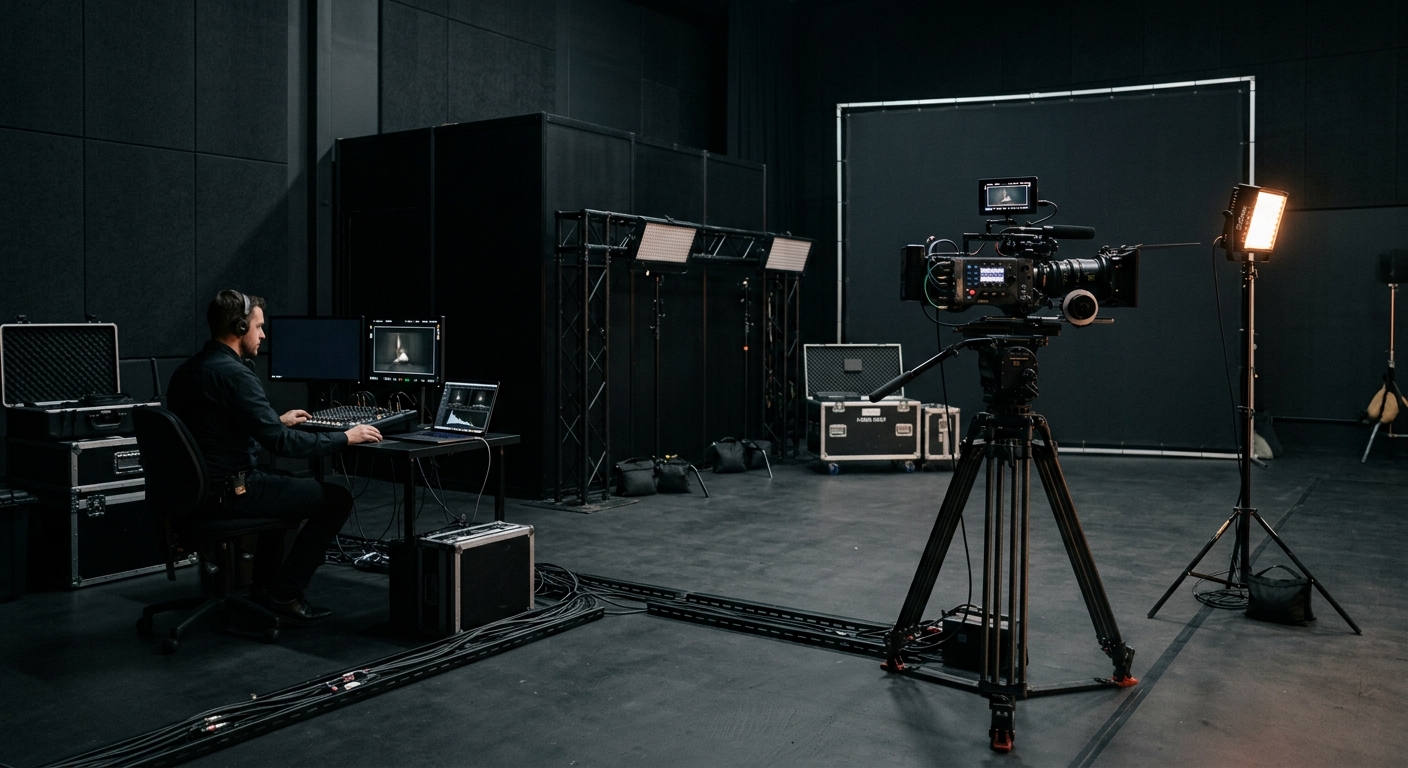
- Casting and Location Decisions: Select talent based on narrative requirements and audience resonance. Determine studio versus location shooting based on creative needs and budget parameters. Plan for audio quality that meets broadcast standards on big screen playback.
Timeline recommendations: Pre-production (concept to approved storyboard) typically requires 2-4 weeks depending on complexity and approval cycles. Build buffer for revision rounds—rushing this phase creates expensive production problems.
Production Best Practices
Production approach selection directly impacts both quality outcomes and budget efficiency. The following comparison helps readers choose optimal methods for their ctv advertising campaign requirements.
| Criterion | Studio Shooting | Location Shooting |
|---|---|---|
| Visual Control | High—lighting, background, sound fully controlled | Variable—natural light, ambient audio challenges |
| Logistics & Cost | Higher setup costs, more efficient per minute | Travel, permits, weather dependencies |
| Schedule Predictability | Consistent, minimal surprises | More variables, potential for delays |
| Crew Requirements | Medium—dedicated lighting, grip, sound | Larger crew to manage logistics |
| Quality Outcome | Clean, controlled, ideal for premium positioning | Authentic settings, natural feel |
| Best For | Product demonstrations, brand messaging | Lifestyle content, local businesses |
For brands with constrained budgets, motion graphics and animation offer controlled, high-quality alternatives to live action. These approaches work particularly well for complex explanations, stylized messaging, and short commercial and testimonial videos where live production costs would exceed value.
Common Challenges and Solutions
CTV commercial production presents specific obstacles that derail campaigns when unaddressed. These challenges span technical compliance, creative optimization, and leveraging OTT and connected TV streaming opportunities alongside smart resource allocation.
Technical Compliance Issues
Platform rejection remains the most common production failure point. Ads fail compliance checks due to incorrect aspect ratios, audio loudness violations, safe area breaches, wrong codecs, or excessive file sizes.
Solution: Maintain updated specification sheets for each streaming platform. Implement QA checklists that verify resolution, bitrate, audio levels, and safe area compliance before submission. Test deliverables on actual connected tv devices—Apple TV, Fire TV, gaming consoles—to identify playback issues that desktop preview misses. Partner with production teams that understand precise targeting requirements and platform-specific ctv metrics.
Creative Optimization for Multiple Platforms
Brands typically need commercials that work across ctv platforms, digital ads, and social environments. Balancing uniformity with platform appropriateness challenges even experienced teams.
Solution: Design master assets with modularity. Create primary footage that supports multiple edit lengths (6, 15, 30 seconds), static overlays for certain placements, and QR code integration for interactive-capable inventory. Save raw footage and project files to enable efficient adaptation. Content tailored to ctv best practices significantly outperforms simple linear repurposing—the effort investment returns measurable results.
Budget Constraints vs. Production Quality
High-quality production for streaming tv ads requires investment, but not every brand has unlimited resources. Balancing visual impact with budget reality requires strategic prioritization.
Solution: Concentrate resources on the first 3-6 seconds where attention and recall concentrate. Use mixed approaches—one premium awareness spot paired with efficient variations for frequency building. Pre-visualize thoroughly to avoid costly reshoots. Consider shared shoots for multiple spots when talent and locations align. Partner with production companies that understand both premium quality requirements and practical budget management.
Conclusion and Next Steps
CTV commercials in 2026 require specialized production approaches that honor both traditional tv storytelling craft and digital advertising precision. The brands achieving strongest results—5× ROAS, 94% completion rates, significant brand lift—share common characteristics: purpose-built creative, technical excellence, and strategic measurement.
Connected tv advertising has moved beyond experimental status to become the primary pathway for reaching engaged audiences on tv screens. With linear tv viewership declining and streaming service adoption accelerating, the ability to create campaigns optimized for internet connected devices determines competitive position.
Connected TV (CTV) advertising is projected to reach $38 billion in the U.S. by 2026, highlighting its growing importance in the advertising landscape. Advertisers using CTV can achieve precise audience-based targeting, utilizing both first- and third-party data to deliver highly relevant ads, which surpasses traditional TV’s broad approach.
Ready to develop your ctv advertising campaign? Follow these sequential steps:
- Define clear objectives—brand awareness, direct sales, or hybrid approach—and establish measurement framework before creative development begins
- Audit current video assets to determine what requires new production versus strategic adaptation for ctv platforms
- Develop technical specifications documentation covering all target streaming platforms and connected tv devices
- Partner with production expertise that understands both creative best practices and platform-specific compliance requirements
- Build measurement infrastructure including pixel tracking, brand lift studies, and attribution modeling before campaign launch
Related topics worth exploring include media planning for ctv ad spend allocation, attribution measurement across household devices, and optimize campaigns strategies for ongoing performance improvement. Automatic content recognition and viewing habits data continue to expand targeting precision for reaching desired audience segments.
For brands seeking expert partnership in CTV commercial production, Granite River Studios brings comprehensive video production capabilities combined with a portfolio of high-impact brand storytelling and advertising campaigns and deep understanding of connected tv technical requirements and creative best practices that boost engagement across streaming platforms.
Additional Resources
Production Checklist for CTV Commercial Specifications:
- Resolution: 1920×1080 (1080p) preferred, 1280×720 minimum
- Aspect Ratio: 16:9 landscape standard
- File Format: MP4 or MOV container, H.264 codec
- Audio: Stereo AAC or PCM, 48 kHz, -24 LUFS (U.S.)
- Bitrate: 15,000-30,000 Kbps for video
- Safe Area: 3.5% minimum margin from all edges
- Frame Rate: 23.976, 24, 25, 29.97, or 30 fps progressive
Creative Brief Template Elements for CTV Commercials:
- Campaign objective classification (awareness/response/interactive)
- Target audience definition including audience segments and local audiences
- Key message hierarchy with first 3-6 second priority
- Call to action specification (QR code, URL, remote prompt)
- Technical delivery requirements per platform
- Measurement KPIs and success criteria
- Production timeline with milestone dates
Platform-Specific Guidelines: Reference individual streaming platform creative specifications for Hulu, Peacock, Paramount+, Netflix, Pluto TV, and premium CTV inventory sources. Requirements for connected tv ads vary by platform, with some accepting interactive formats and others requiring standard video ads exclusively.