Introduction
Video production services are professional solutions that handle the entire production process of creating video content-from initial concept development through filming and post production editing to final delivery. This guide covers everything businesses need to know about commissioning professional video in 2026, including corporate videos, commercials, animated explainer videos, and digital marketing content. DIY and in-house video creation falls outside the scope of this article.
Business owners, marketing managers, and entrepreneurs looking to leverage video to grow their brand, reach new customers, and strengthen their marketing efforts will find actionable guidance here. With approximately 91% of businesses now using video as a marketing tool, understanding how professional video production works isn’t optional-it’s a competitive necessity. Video production services enhance marketing by providing tailored content that speaks directly to your target audience, builds credibility, and drives measurable results.
In short: video production services are professional solutions that manage every phase of video creation-pre production planning, principal photography or animation, and post production-so that businesses receive high quality video content aligned with their brand and goals.
By the end of this guide, you will:
-
Understand the core service categories and how pre-production, production, and post production each contribute to the final video
-
Know the differences between corporate, marketing, and animation video types
-
Have a clear understanding of cost factors, current pricing benchmarks, and how to budget effectively
-
Be equipped with criteria for selecting the right video production company or video partner
-
Possess a practical implementation workflow to manage your next project from start to finish
Understanding Video Production Services
Video production services encompass all stages required to produce a professional video: ideation, scripting, storyboarding, casting, filming or animation, video editing, sound design, color grading, motion graphics, and optimizing outputs for different platforms. These services are delivered by a video production agency, a specialized studio, or freelance producers-each bringing different levels of technical expertise, creativity, and capacity to a project.
The relevance to modern business is hard to overstate. The U.S. video production market is forecast to grow from $31.24 billion in 2025 to $181.24 billion by 2033, reflecting a CAGR of roughly 24.6%. This growth is fueled by expanding demand across digital marketing, corporate communications, training videos, streaming, and social media content. High-quality videos build credibility and trust with audiences, and video content captures attention faster than text-making professional video production a top priority for companies across various industries.
Core Service Categories
Video production services break down into three main categories, each contributing distinct value to the final video:
Pre-Production covers everything before cameras roll or animation begins: creative briefs, concept development, scriptwriting, storyboarding, location scouting, casting, permits, scheduling, and budgeting. This phase typically consumes 15–20% of total project budget. It sets the foundation-poor pre production planning often results in delays, reshoots, and inflated costs. Video production companies often provide location management and casting services as part of this phase.
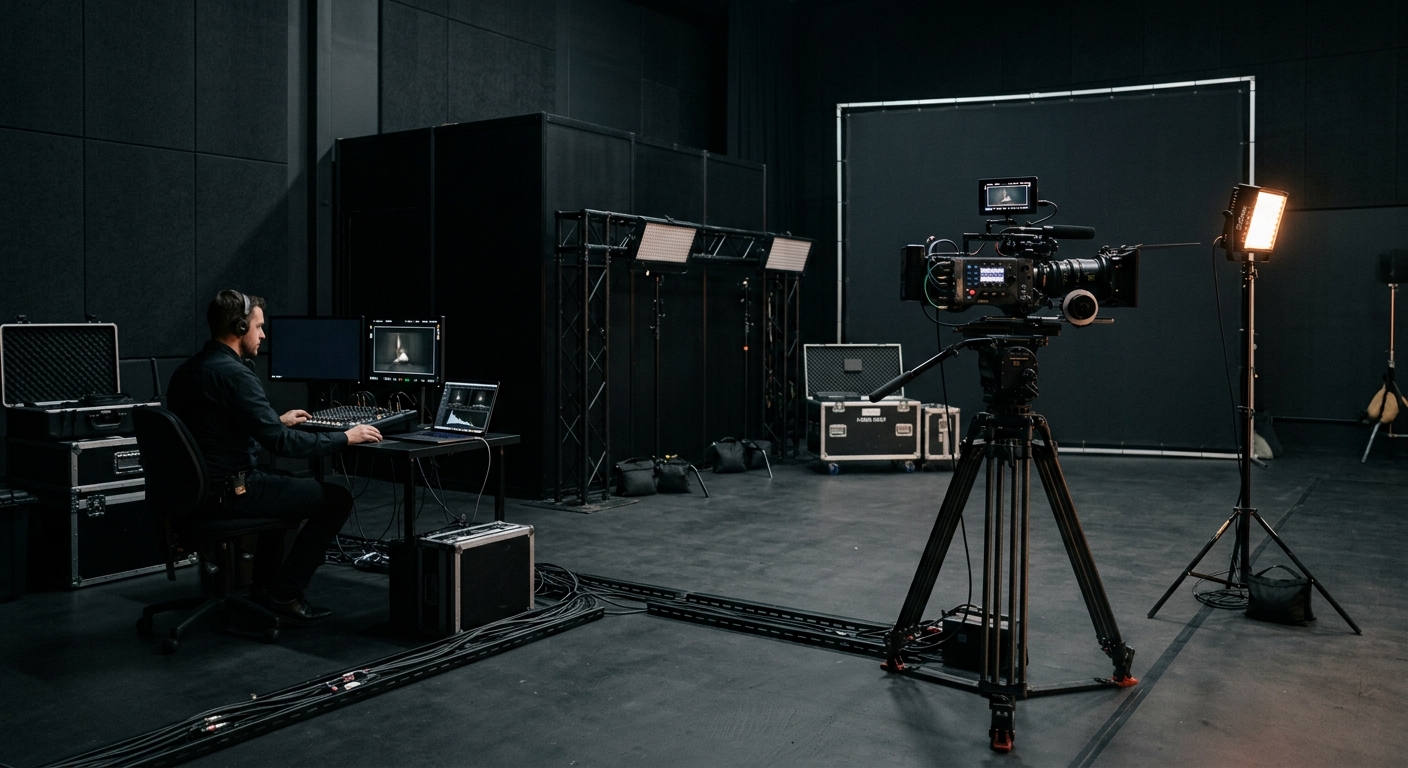
Production is the actual filming or animation capture. This is the most resource-intensive stage, consuming 40–55% of total budget. It involves crew, equipment, professional cinematography, lighting, sound capture, b roll, and logistics. Adding multiple shoot days, union talent, complex sets, or aerial videography increases costs significantly. For animation projects, this phase includes model creation, rigging, voice recording, and timing.
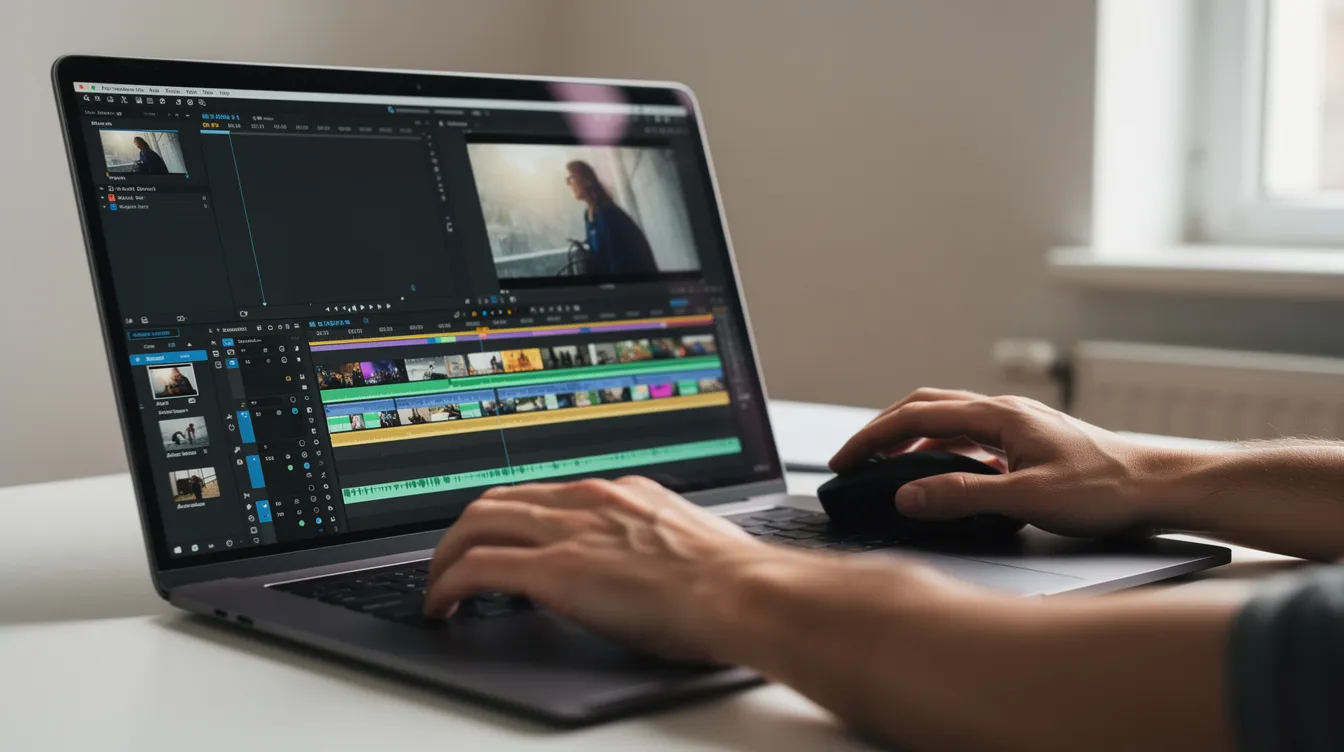
Post Production transforms raw footage or animation assets into the finished product. It includes video editing, color correction, color grading, sound design, music licensing, voiceovers, motion graphics, VFX, closed captions, and rendering for different platforms. This phase typically accounts for 25–35% of total budget and is where the creative vision truly comes to life. Multiple revision rounds, quality checks, and platform-specific formatting happen here.
Production Phases
The three main phases of video production follow a sequential workflow, each producing specific deliverables on defined timelines:
Pre-production delivers scripts, storyboards, shot lists, booked talent, secured locations, and finalized schedules. For simple social media clips, this might take a few days. For brand videos or commercials, expect one to several weeks. Decisions made here ripple through every subsequent phase.
Production delivers raw footage-multiple camera angles, coverage, b roll-or completed animation assets. A half-day shoot suffices for straightforward social content, while multi-day shoots are standard for commercials and brand films. Animation projects may require weeks or months of production work.
Post production delivers the edited, polished final video in all required formats. Short marketing videos typically require 10–30 hours of editing time. The final delivery phase adds another one to two days for rendering platform-specific versions (16:9 for YouTube, 9:16 for TikTok, 1:1 for Instagram feeds), adding captions, and preparing thumbnails.
Understanding these phases is essential context for selecting the right type of video production service-which is exactly where we turn next.
Types of Video Production Services
Building on the foundational understanding of production phases, different video production specializations apply those phases to distinct purposes, audiences, and technical requirements. Different video formats serve unique roles in the marketing funnel, and choosing the right type determines everything from budget to creative approach.
Corporate Video Production
Corporate video production companies create content for businesses that serves informational, educational, or internal communication purposes. This category includes training videos, educational videos, customer testimonials, company overviews, onboarding content, and culture films. Brand videos provide insights into a company’s mission and culture, while customer testimonials build trust and credibility for potential buyers.
The target audience for corporate videos includes employees, shareholders, clients, and internal stakeholders. These videos tend to be evergreen-designed for repeated use-and often require localization through translations and subtitles. Production typically features interview-style filming, voiceovers, slides, and b roll rather than dramatic cinematography or heavy VFX. The emphasis is on clarity of messaging, consistent branding, and professional audio quality. Corporate and promotional videos can increase conversion rates through clear CTAs when properly integrated into sales and communication workflows.
Marketing and Commercial Videos
Commercial video production companies focus on advertising and marketing-content designed to drive engagement, generate leads, and convert viewers into new customers. This category covers product demos, TV and digital advertisements, social media promos, brand campaigns, promotional content, and product launches. Promotional videos are designed to capture attention and build excitement around products, services, or brand moments.
Marketing videos demand higher production value than most corporate content. Expect strategic storytelling, professional cinematography, cinematic lighting, and potentially celebrity talent, special effects, or complex multi-location shoots. Production costs reflect this: high-end commercials can exceed $50,000 per minute, while social media clips typically range from $500 to $5,000 per minute. Multiple versions are produced for different platforms, and performance is measured through CTR, view time, and conversion lift. Videos improve SEO by increasing dwell time on websites, adding another dimension to their marketing value.
Animation and Motion Graphics
Animated video production companies specialize in creating animations-2D vector, 3D models, whiteboard-style, kinetic typography, visual effects overlays, and explainer videos. Explainer videos help inform consumers and illustrate product usage, making them particularly valuable for B2B SaaS companies, technical products, and abstract services where live action would struggle to communicate clearly.
Animation requires skilled animators, specialized software (After Effects, Cinema 4D, Blender), and significant rendering time. The upfront cost of designing style assets and creating templates is high, but incremental costs drop once assets are established. Animation offers exceptional value in creative freedom-complete control over visual style, consistency, and messaging without dependence on locations, weather, or talent availability. The limitation is longer lead times, especially for 3D work, and the absence of real-world authenticity that live action provides.
In summary: corporate videos prioritize clarity and evergreen utility, marketing videos prioritize persuasion and production value, and animation prioritizes creative flexibility and explanatory power. Knowing which type fits your objectives shapes every decision in the implementation process that follows.
Video Production Process and Implementation
With a solid grasp of service types, the practical question becomes: how does a video production project actually work from start to finish, and who should you hire to execute it?
Step-by-Step Production Workflow
This workflow applies whether you’re producing a 30-second social video or a 10-minute brand film. The scale changes; the sequence doesn’t. Video production services include concept development and post-production as bookends of this collaborative process.
-
Concept development and scripting – Define your objectives, target audience, key messages, and measurable goals. Scriptwriting covers dialogue, voiceover, and calls to action. Mood boards and creative direction documents ensure alignment between your vision and the production team’s execution. Storytelling ability is necessary for effective video production, and this is where your unique story takes shape. Weak scripting leads to ambiguity during filming and expensive corrections later.
-
Pre-production planning and casting – Location scouting, talent casting (actors, voiceover artists), scheduling, props and wardrobe, equipment booking, and permits. Crew call sheets, risk assessments, and budget allocations are finalized. This phase separates professional results from mediocre ones. A production company that invests properly here helps you avoid surprises during filming.
-
Principal photography and filming – For live action: multi-camera setups, professional lighting, sound capture (including a dedicated sound mixer), b roll, and coverage from multiple angles. For animation: asset creation, storyboard frames, voice recording, timing, and rigging. Documentary style video companies focus on storytelling and real-life events during this phase, while commercial shoots may involve aerial videography, live events coverage, or studio work. All raw assets are backed up and logged with metadata.
-
Post-production editing and color grading – The editing team assembles the narrative, selects takes, refines pacing, and layers in music, sound effects, voiceovers, and sound design. Color correction and color grading establish the visual tone. Motion graphics, VFX, and titles are integrated. Multiple review rounds ensure stakeholder alignment. This is where the production team and client work closely through a collaborative approach to refine the final video.
-
Final delivery and distribution – Export in required formats for different platforms (web, mobile, TV, social). Add closed captions and subtitles. Prepare aspect ratio variants. Optimize file sizes. Deliver with thumbnails, metadata, and performance tracking setups. Social videos are optimized for platforms like Instagram Reels and TikTok, while longer formats target YouTube or website embedding. Content repurposing maximizes the value of marketing budgets-a single shoot can yield dozens of deliverables.
Timelines vary significantly: a simple social video might take 1–2 weeks end-to-end, while a commercial with multiple shoot days and animation may take 4–8 weeks. For SaaS and tech clients, production cycles average around 7.2 weeks, often creating “video debt” when content lags behind product updates.
Service Provider Comparison
Choosing the right video partner is one of the most consequential decisions in any video project. Portfolio quality is essential when selecting a video production partner, and choosing a video production partner involves evaluating technical skill and storytelling ability together.
|
Criterion |
Full-Service Agency |
Specialized Studio |
Freelance Producer |
|---|---|---|---|
|
Service Type |
All phases; strategy through final delivery |
Focused expertise (animation, VFX, color) |
Narrower roles (shooting, editing, voiceover) |
|
Typical Cost Range |
High; $10,000–$100,000+ per project |
Mid to high depending on specialization |
Lower per project; $500–$5,000 typical |
|
Timeline |
Longer but with parallel workflows |
Moderate; specialized but may queue work |
Variable; faster for small tasks but capacity-limited |
|
Best For |
Complex campaigns, brand films, high-stakes commercials |
Projects requiring specific creative styles |
One-off clips, startups, tight budgets |
Full-service companies handle all aspects of video production-from concept through distribution-making them ideal for clients with diverse video needs or ongoing content requirements. They deliver consistency across multiple deliverables and provide dedicated project management. Average agency full-project costs run approximately $42,281, covering everything from short social clips to longer brand films.
Specialized studios bring deep expertise in specific areas-animation houses, color grading specialists, VFX studios-and are the right choice when a project demands a particular creative skill set that generalist agencies lack.
Freelance producers offer flexibility and lower costs for straightforward projects. However, agencies provide faster turnaround, more consistency, and dedicated account management compared to freelancers who may face capacity limits or inconsistent quality across projects. Multiple quotes should be compared to ensure fair pricing in video production, regardless of provider type.
Video production services can accommodate both low-budget and high-end projects. A good production company understands your brand and goals, demonstrates reliability and clear communication, and can scale video production as needed. Flexibility in processes is crucial for video production success-look for a company that specializes in your video type while maintaining adaptability. Whether you’re working with a full service video production agency in Los Angeles or a specialized studio elsewhere, these selection criteria remain constant.
The right provider choice also helps navigate the common challenges that follow.
Common Challenges and Solutions
Even well-planned video production projects encounter obstacles. Recognizing these challenges early-and having strategies ready-separates smooth productions from costly disasters.
Budget Constraints
Production pricing can vary based on crew size and equipment used, and unexpected costs around talent, locations, revisions, and scope changes can quickly inflate budgets. The solution: prioritize essential deliverables and define a minimal viable video before expanding scope. Consider phased production-test with a single video before committing to a full campaign. Get detailed quotes with line-item breakdowns including costs for additions and revisions. AI tools are reducing median production costs from approximately $4,200 to $2,500 per finished minute for small and mid-size business content, making them worth exploring for certain formats. Reuse assets across videos to amortize pre-production costs and extract exceptional value from your investment.
Timeline Management
Delays cascade through production phases: location unavailability pushes filming, which compresses post production, which forces rushed editing that compromises quality. The solution: establish realistic milestones with built-in buffers at each phase. Build multiple review cycles into the project timeline. Ensure stakeholder alignment on creative direction early-feedback loops are the single largest cause of post-production delays. Maintain backup plans for locations and talent. For high-volume social media content or digital marketing content, adopt agile production methods that prioritize rapid iteration over perfection. Good communication is essential for a successful project at every stage.
Quality Control Issues
Inconsistent audio, poor lighting, weak color, misalignment with brand identity, and scope creep all threaten the quality of the final video. Professional video production can significantly enhance brand visibility-but only when quality standards are maintained. The solution: define quality standards upfront using style guides, brand assets, and reference videos. Request work samples and portfolio reviews before engagement. Implement staged approval processes-sign off on scripts before filming, approve rough cuts before fine editing, and review color grading before final render. Establish explicit revision limits in your contract. Embedded videos increase user engagement on social media only when they meet audience quality expectations, so cutting corners on QC undermines the entire investment.
Proper planning across budget, timeline, and quality forms the foundation for consistently successful video production outcomes.
Conclusion and Next Steps
Video production services require strategic planning, the right provider selection, and disciplined execution across pre-production, production, and post production phases. Whether you need corporate videos for internal training, commercials to drive engagement and attract new customers, or animated explainer videos to communicate complex products, the principles remain the same: start with clear objectives, budget realistically, choose a production company whose creative vision and technical expertise match your needs, and manage the collaborative process with structured milestones and quality checkpoints.
Your immediate next steps:
-
Define your video objectives and target audience – Establish measurable goals (awareness, conversion, training completion) and identify exactly who the video needs to reach
-
Set a realistic budget and timeline – Use the cost benchmarks in this guide to frame expectations; build in 15–20% buffer for contingencies
-
Research and shortlist production companies – Evaluate portfolios, domain experience, service range, and communication style; choose a company that specializes in your video type
-
Request proposals and work samples – Compare multiple quotes, review relevant case studies, and assess cultural fit before committing
For further exploration, consider diving into video marketing strategy to connect production with distribution and measurement, content repurposing frameworks to maximize ROI from each production, and platform-specific optimization to ensure your videos perform across every channel where your audiences spend time.
Additional Resources
Industry Pricing Guidelines (2026 Benchmarks)
-
Social media clips: $500–$5,000 per minute
-
Corporate videos (2-minute): $2,000–$20,000
-
High-end commercials: $50,000+ per minute
-
Budget allocation: pre-production 15–20%, production 40–55%, post production 25–35%, distribution/reformatting 10–15%
Production Checklists
-
Pre-production: Creative brief, script, storyboard, location permits, talent contracts, equipment list, crew schedule, budget sign-off
-
Production: Equipment check, wardrobe/props, call sheets, backup storage, b roll shot list, sound check, lighting setup
-
Post-production: Rough cut review, color grading pass, sound design and mix, music licensing confirmation, caption/subtitle creation, platform-specific renders, final QC
Quality Assessment Criteria
-
Video resolution and frame rate consistency
-
Framing, composition, and professional cinematography standards
-
Lighting quality and color balance
-
Audio clarity and sound design quality
-
Brand consistency across graphics, motion, and tone
-
Pacing and narrative coherence
Recommended Tools
-
Editing: Adobe Premiere Pro, Final Cut Pro, DaVinci Resolve
-
Motion graphics: After Effects, Cinema 4D, Blender
-
Collaboration: Frame.io, Asana, Slack
-
AI-assisted production: Script generation tools, AI voiceover platforms, automated editing assistants