Introduction
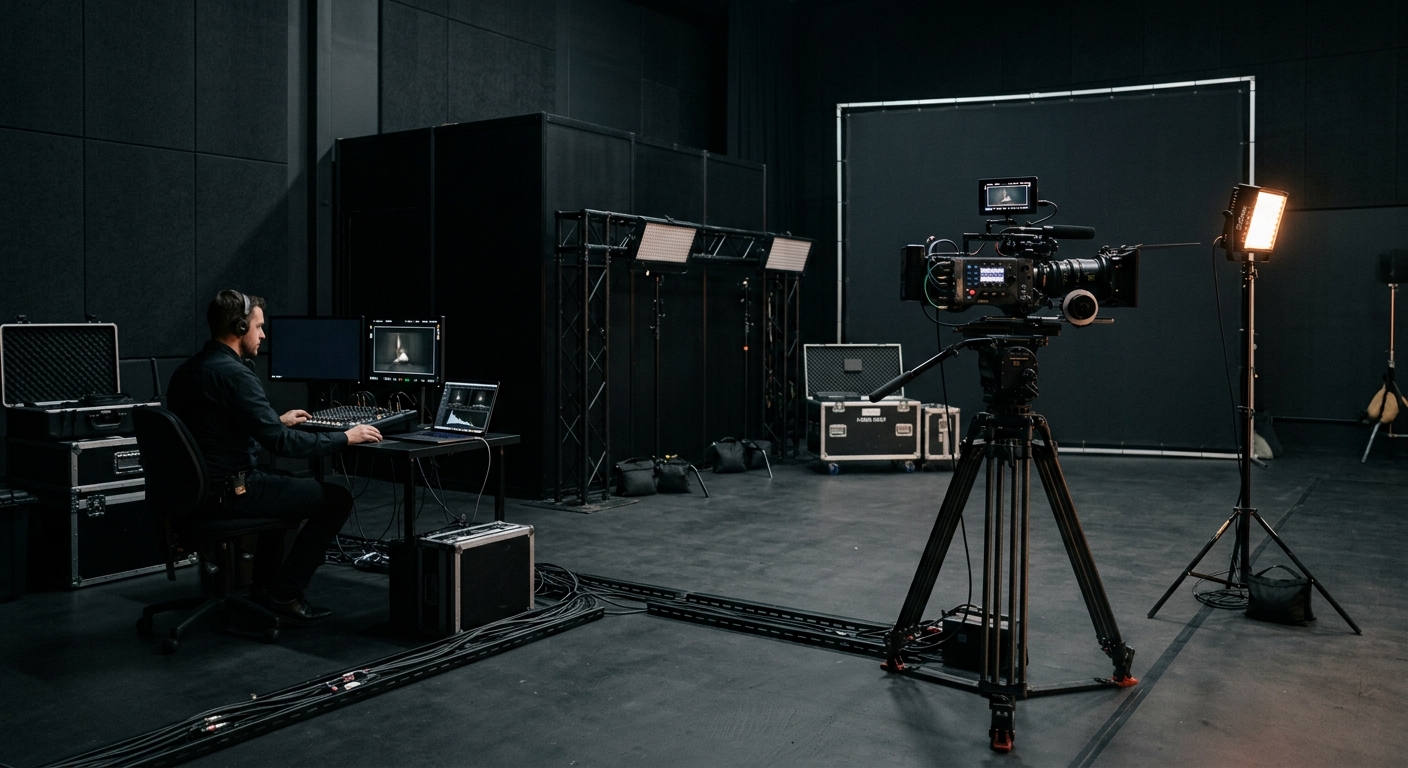
Lighting is a foundational element in video production, directly impacting the look, feel, and professionalism of your finished product. This article is designed for video producers, filmmakers, and content creators who want to elevate their work from amateur to cinematic. We’ll explore the importance of lighting in video production, covering why it matters, how it sets the mood and visual mood, defines your subject, ensures consistency, and the essential techniques and types of lighting every creator should know. By understanding how to manipulate lighting—its quantity, direction, quality, and color, which are among the most important aspects of lighting—you can transform your videos and communicate your message more effectively.
Importance of Lighting in Video Production
Lighting involves manipulating quantity, direction, quality, and color, all of which are important aspects of lighting in video production. The importance of lighting in video production cannot be overstated—it quietly decides whether your final cut looks like a professional production or a home video. Even with the best camera and script, poor lighting can affect how professional your video looks and undermine your entire project.
Color Temperature and Mood
The color, or hue, of a light source, is measured on the Kelvin scale, which helps set the tone of a scene in film production. Light is one of the fastest emotional shortcuts in visual storytelling. Cool blues lean melancholy or clinical, while warm amber tones feel intimate and nostalgic. Those choices can also shape the viewer’s emotional response.
Contrast and Emotional Tone
-
High contrast lighting creates tension and drama.
-
Soft, even light feels safe and trustworthy.
-
Lighting ratios influence genre perception: lower ratios feel lighter, while higher ratios and deep shadows create drama or film-noir-style mystery.
Lighting and Brand Messaging
Before viewers process the dialogue, the lighting has already told them how to feel. For example:
-
A product video lit with bright, clean key light reads as confident and modern.
-
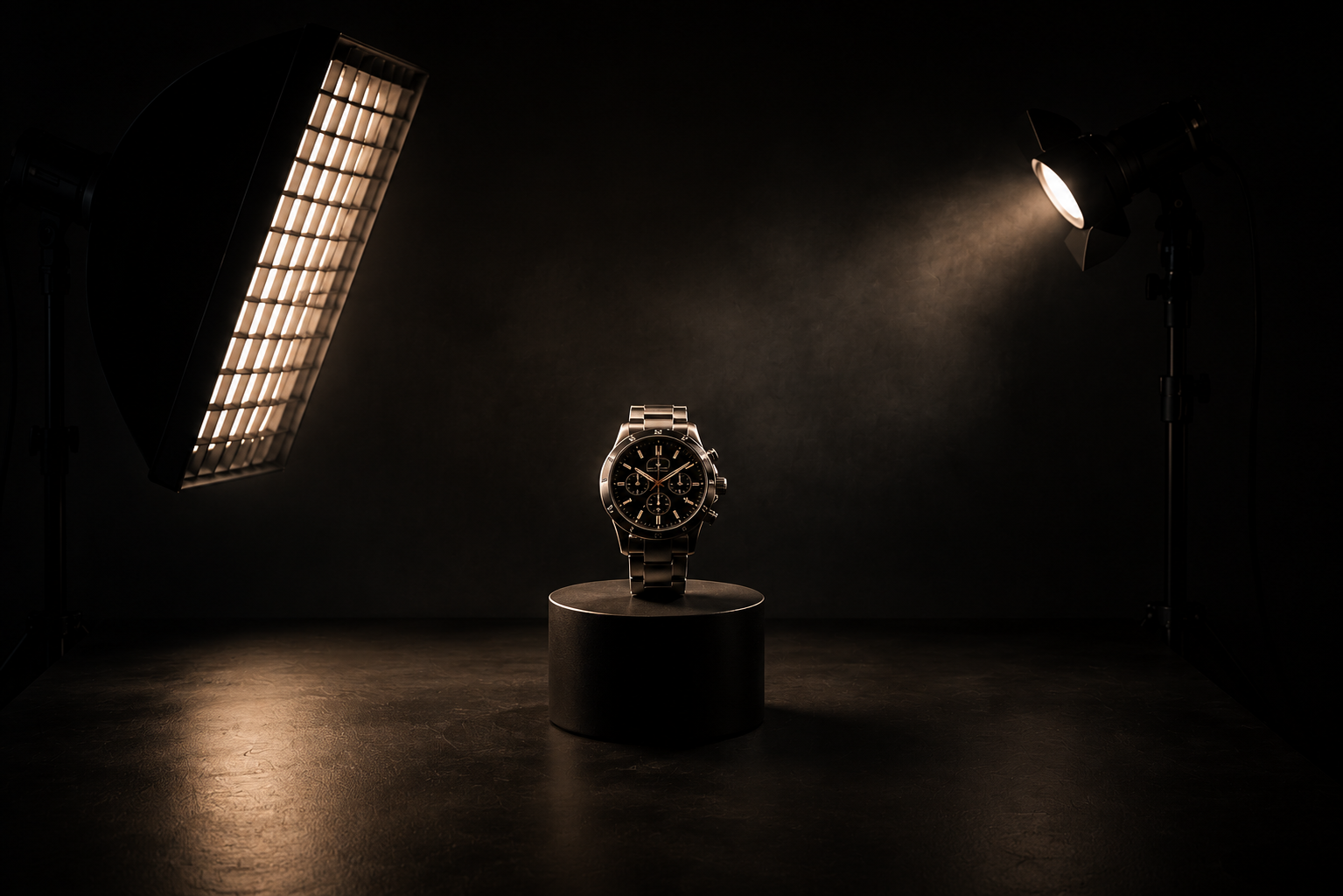
The same product lit with low, raking shadows feels mysterious or premium, and the lighting should support the brand message in the same way the script and art direction do.
Neither approach is wrong—they simply signal different brand messages. The director and Director of Photography (DP) must ensure the lighting aligns with the script’s intent while staying balanced with other elements of the production.
Transition: Beyond mood, lighting also plays a crucial role in defining your subject and creating depth, as explored in the next section.
The Key Light Defines Your Subject and Builds Depth
A flat scene is a forgettable scene. Lighting is essential for separating your subject from the background and creating a three-dimensional look.
Shaping the Subject with Key Light
-
The key light is the primary source of directional lighting.
-
Shadows created by the key light add depth and texture across the planes of the face, helping create a distinct atmosphere and guide attention to important elements in the scene so the subject stands out.
-
In interviews, a soft key placed slightly off-axis gives authority without harshness.
Guiding Attention with Fill and Back Light
-
Add a touch of fill light on the shadow side to control contrast.
-
The human eye can read detail and shifts in brightness more flexibly than the camera can, but viewers are still naturally drawn to the brightest part of the frame, so balanced lighting guides attention.
Transition: To achieve this depth and separation, the three-point lighting setup is a fundamental technique, as detailed in the next section.
The Three-Point Lighting Setup: Defining and Highlighting Your Subject
The three-point lighting setup is a fundamental technique that highlights the main subject of a scene, consisting of key light, fill light, and back light to create depth and dimension.
Three-Point Lighting Explained
-
Key Light: Main source, used to illuminate the subject and shape it.
-
Fill Light: Softens shadows on the opposite side of the face or subject, controlling contrast.
-
Back Light: Separates subject from background, adds depth.
Why Three-Point Lighting Matters
-
Ensures your subject stands out from the background; a proper lighting setup helps that separation stay consistent and gives the crew more control over mood and focus.
-
Adds visual interest and professionalism to your shots.
-
Provides flexibility to adjust mood and focus.
Transition: Once the basics are covered, lighting becomes a powerful creative tool for visual storytelling, as detailed in the next section.
Lighting as a Creative Tool in Film Production
Lighting is not just a utility—it’s one of the most expressive tools in video and film production.
Types of Lighting in Video Production
There are four main types of lighting used in video production: natural light, artificial lighting, diffused, and reflective, and crews often begin by assessing available light before deciding what to add or modify. Each serves different purposes in creating visual appeal.
Overview of Lighting Types
|
Lighting Type |
Description |
Typical Use Cases |
Pros |
Cons |
|---|---|---|---|---|
|
Natural |
natural light sources such as sunlight, daylight, or window light |
Outdoor shoots, window-lit scenes |
Free, realistic; the sun is the primary outdoor source |
Unpredictable, hard to control |
|
Artificial |
Electric lights, such as a studio light (LEDs, tungsten, HMIs) |
Studio, controlled environments |
Consistent, controllable |
Requires power, can be expensive |
|
Diffused |
Light softened by diffusion material (softboxes, umbrellas) |
Portraits, interviews |
Flattering, reduces harsh shadows |
May reduce light intensity |
|
Reflective |
Light bounced off surfaces (reflectors, walls) |
Fill light, subtle highlights |
Softens light, inexpensive |
Less precise, needs positioning |
Creative Techniques and Color
-
Colored gels can suggest time of day, mood, or brand palette.
-
Hard light creates sharp, distinct shadow edges.
-
Soft lighting produces smoother, more gradual transitions that flatter the subject.
-
Practical light sources (desk lamps, neon signs, windows) can be enhanced or shaped to feel motivated and real.
Building a Lighting Language
A consistent lighting style across a campaign reinforces brand identity. Brightness, shadow, and color are key elements most viewers feel, even if they can’t name them.
Transition: Consistency in lighting is also crucial for seamless editing and professional results, as discussed in the next section.
Consistent and Proper Lighting Makes Scenes Cut Together
Consistency in lighting ensures that scenes flow smoothly and maintain visual continuity.
The Importance of Consistency
-
The audience may not consciously notice lighting, but abrupt changes between shots are distracting.
-
For multi-camera shoots or productions with multiple setups, repeatability is key.
Achieving Consistent Results
-
Use artificial sources that give you full control over brightness, color temperature, and direction for consistent results.
-
The color, or hue, of a light source, is measured on the Kelvin scale, which helps set the tone of a scene in film production.
-
Choose fixtures with a CRI above 90 for accurate color reproduction and more professional-looking, visually appealing color.
-
Adjust output in lux or lumens to control exposure and contrast.
On-Set Continuity
-
Lock in a consistent look across every shot to avoid a patchwork final cut.
-
Continuity work happens on set, not in the edit.
Transition: Proper lighting is also essential for clarity and technical quality, which we’ll cover next.
Proper Lighting Ensures Clarity and Professionalism
At its core, light is what allows the camera to see. Proper lighting is foundational for clear, polished footage.
Eliminating Technical Issues
-
Good lighting eliminates grainy noise in dark footage, because cameras do not see a scene the same way the eye does and need proper illumination to reveal detail clearly.
-
Avoids blown-out highlights and muddy shadows by managing bright lights carefully so they illuminate the subject without causing glare or blown areas.
-
Ensures faces and product details are visible and readable.
Choosing the Right Equipment
-
Studio lights for videography include LED lights, light panels, ring lights, and monolights.
-
Select enough light for the situation to ensure clarity.
The Value of Clarity
Clarity may not be glamorous, but it’s the foundation for everything else in your video.
Transition: Sometimes, the best lighting move is not adding more, but taking it away—explored in the next section.
Subtraction Is Lighting, Too
A common misconception is that lighting always means adding more light. In reality, subtractive techniques are just as important.
Subtractive Lighting Techniques
-
Flagging off a spill: Blocking unwanted light from hitting certain areas.
-
Negative fill: Using black material to deepen shadows on the shadow side of a face.
-
Blacking out a window: Eliminating ambient bounce to control the environment.
Why Subtraction Matters
-
Creates contrast, shape, and mood in otherwise flat or overly bright environments, especially in rooms with white walls where bounce and reflections can wash out contrast.
-
Allows for cinematic results even in small spaces with limited gear.
Transition: While some lighting issues can be fixed in post-production, it’s always better to get it right on set, as explained next.
“Can’t We Just Fix It in Post?”
While post-production can address some lighting mistakes, it’s often costly and time-consuming.
The Cost of Fixing in Post
-
A 30-second commercial runs roughly 720 frames—serious lighting correction must be handled with care across every frame.
-
Problems caused by poor lighting are usually far costlier to fix later than to address on set.
-
What takes minutes to fix on set can require hours in post, often resulting in compromises.
The Value of Getting It Right
-
In video production, natural, artificial, diffused, and reflective lighting each serve different purposes, so choosing the right lighting early saves time later.
-
Getting it right in camera ensures consistent mood, clarity, and control from shot to shot.
-
It’s a budget, schedule, and quality decision all at once.
Transition: To sum up, lighting is not just a technical detail—it’s central to the emotional and visual impact of your video.
The Takeaway
Lighting in video production is far more than a finishing touch—it’s an essential part of how a video communicates emotionally, visually, and practically.
Lighting and Genre
-
High-key lighting suits upbeat commercial or comedic tones.
-
Low-key lighting is common in horror or thriller genres.
-
Lighting ratios influence genre perception and audience response.
Final Thoughts
Whether you’re working with available daylight, a full studio package, or a mix of both, the choices made on set determine how the finished piece feels. If your next project needs that kind of attention to detail, that’s exactly the work we do. Let’s talk about what you’re trying to build.