Introduction
Marketing channels are the pathways businesses use to distribute video content and reach their target audience—from social media platforms to broadcast television, email marketing to digital billboards. There are many different types of marketing channels, both physical and digital, that businesses use to reach and engage customers. The internet plays a crucial role as a medium for delivering multimedia content like streaming videos and supports channels such as email marketing, expanding the reach and effectiveness of digital communication. Understanding how these channels work together determines whether your video production investment generates a full year of content or sits unused after a single campaign.
This guide covers the essential channel types for video distribution, strategic channel selection criteria, and practical approaches to maximizing production efficiency across multiple marketing channels. Selecting the right marketing channels is important in the marketing mix, as it is crucial for effective distribution, promotion, and maximizing ROI. Marketing channels important: they play a central role in the marketing mix by enabling effective distribution and promotion, and should be identified, optimized, and continuously tested to maximize marketing ROI across various platforms. Marketing channels significantly impact a business’s bottom line by determining how effectively products and services are delivered to the target market. The target audience includes marketing directors, brand managers, and business owners planning comprehensive video shoots who want to extract maximum value from every production day. In addition to practical approaches, content marketing is a key strategy that involves creating valuable, relevant content—such as blogs, guides, and videos—to attract and nurture potential customers, build trust, and guide them toward a purchase. Whether you’re creating client testimonials, employee training materials, advertising spots, or social reels, the principles here apply directly to your planning process.
The core insight: A single well-planned video production day can generate content for every marketing channel your business uses—but only with deliberate pre-production planning that accounts for each channel’s specific requirements.
By the end of this guide, you will:
-
Understand the distinct categories of marketing channels and their video specifications
-
Know how to select the right marketing channels for different content types
-
Master the planning process for multi-channel video production shoots
-
Learn measurement approaches for tracking performance across different channels
-
Avoid common distribution mistakes that waste production budgets
Understanding Marketing Channels
Marketing channels are the mediums through which businesses communicate with customers and deliver content to their target audience. In the context of video marketing, these channels function as distribution systems—each with unique technical requirements, audience expectations, and content consumption patterns. Understanding why marketing channels matter requires recognizing that the same video content rarely performs identically across all platforms; optimization for each channel determines whether your investment converts into business results.
Channels connect brands with audiences through various touchpoints throughout the customer journey. A potential customer might discover your company through a YouTube ad, engage with your content on social media, receive video-enhanced email marketing, and finally convert after watching a testimonial on your landing pages. Each touchpoint represents a distinct channel opportunity.
Owned vs. Paid vs. Earned Channels
Owned channels include properties your business controls directly: your website, email lists, branded social media accounts, and internal training platforms. Video content on owned channels gives you complete control over messaging, presentation, and distribution timing. For example, employee training videos hosted on your learning management system remain entirely within your control.
Paid advertising channels require budget allocation for placement—broadcast television, paid social media, digital display networks, and search engines advertising. These channels offer precise targeting capabilities and immediate visibility but require ongoing investment.
Earned channels emerge when others share, recommend, or feature your content without direct payment. Word of mouth recommendations, press coverage, and organic social sharing fall into this category. Strong video content naturally generates earned distribution through sharing and engagement.
Digital vs. Traditional Channel Categories
Digital marketing channels encompass social media platforms, streaming services, websites, mobile apps, and email systems. The internet serves as the backbone of these digital channels, enabling the delivery of multimedia content such as streaming videos and supporting platforms like email marketing. These channels offer granular targeting, real-time performance data, and flexible video file formats. Digital video distribution allows rapid optimization based on viewer behavior.
Traditional marketing channels remain relevant for video distribution: broadcast TV advertising, OTT/CTV platforms, digital billboards at trade shows, and direct mail with QR codes linking to video content. Print advertising increasingly incorporates video through augmented reality or QR code integration.
Understanding these foundational categories prepares you to evaluate specific channels for your video content strategy and production planning.
Content Marketing Strategy for Video Distribution
A robust content marketing strategy is the backbone of successful video distribution, ensuring your video content reaches the right audience through multiple marketing channels. By thoughtfully integrating digital marketing channels—such as social media, email marketing, and influencer marketing—with traditional marketing channels like print advertising and trade shows, businesses can maximize the impact of their video campaigns and drive measurable results.
The foundation of an effective content marketing strategy lies in creating high-quality, engaging video content that resonates with your target audience. This means understanding your customers’ needs, preferences, and behaviors, then tailoring your messaging and creative approach to address those insights. Whether you’re promoting products, launching new services, or building brand awareness, your video content should be designed to guide customers through the buyer’s journey—from initial awareness to final conversion.
Leveraging several marketing channels is essential for amplifying your message. Digital platforms and social media platforms offer unparalleled reach and targeting capabilities, allowing you to distribute video content directly to your ideal customers. For example, short-form videos on Instagram and TikTok can spark interest and drive engagement, while longer-form content on YouTube or LinkedIn can educate and nurture leads. Email marketing remains a powerful tool for delivering personalized video content straight to your audience’s inbox, increasing open rates and conversion rates.
Traditional marketing channels still play a vital role in a comprehensive marketing strategy. Print advertising can be enhanced with QR codes that link to digital video content, while trade shows provide opportunities to showcase brand stories and product demos on digital displays. By combining digital and traditional channels, you ensure your video content is accessible wherever your audience is most active.
The key to maximizing your video distribution is to coordinate messaging and creative assets across all channels. This unified approach not only reinforces your brand identity but also ensures a seamless customer experience, regardless of where or how your audience encounters your content. By strategically deploying video content through multiple marketing channels, you can increase brand visibility, foster stronger customer relationships, and drive higher conversion rates.
Ultimately, a well-executed content marketing strategy leverages the strengths of both digital and traditional marketing channels to promote products and services, build lasting brand equity, and achieve your business objectives. By continuously evaluating and refining your approach, you can ensure your video content remains relevant, engaging, and effective across every channel your customers use.
Types of Marketing Channels for Video Content
Building on the owned, paid, earned, and digital/traditional frameworks, it’s important to recognize that there are many different types of marketing channels, including both traditional and digital, each with unique requirements. Understanding the different types of marketing channels is essential for effective video content distribution. Each channel category contains specific platforms with distinct requirements for video quality, file format specifications, and content duration. Mapping these requirements before production ensures your shoot captures everything needed for comprehensive distribution.
Before diving into the specifics, it’s also important to note that content marketing is a key strategy that leverages video content to attract and nurture potential customers by providing valuable and engaging material across various platforms.
Broadcast and Streaming Channels
Traditional television advertising maintains effectiveness for brand awareness campaigns reaching broad audiences. Broadcast spots require professional production values, specific video compression standards, and adherence to network specifications. Most broadcast video files use MP4 or MOV container formats at 1920×1080 resolution minimum.
OTT/CTV platforms like Hulu, Netflix ad tiers, and YouTube TV enable targeted video ads reaching cord-cutters and streaming audiences. These digital platforms combine television’s visual impact with digital channels’ targeting precision. Each streaming service maintains specific technical requirements for video format, audio data specifications, and file size limitations.
The production implication: shooting broadcast-quality footage at appropriate resolutions enables distribution across both traditional and streaming channels without quality degradation.
Social Media Video Platforms
Each social media platform has evolved distinct video consumption patterns and technical requirements:
YouTube functions as both a search engine and social platform, favoring longer-form content from 2-15 minutes. Video files in MP4 format with H.264 codec deliver optimal quality. YouTube’s algorithm rewards watch time, making comprehensive content more effective than brief clips.
Instagram requires multiple video formats: 9:16 vertical for Stories and Reels (15-90 seconds), 1:1 or 4:5 for feed posts, and 16:9 for IGTV. Native video uploads consistently outperform link sharing for engagement.
TikTok prioritizes 9:16 vertical video in short durations (15-60 seconds optimal), with high emphasis on immediate hooks and trending audio data integration.
LinkedIn serves professional audiences with 16:9 or 1:1 video content up to 3 minutes. The platform rewards substantive content like client testimonials and thought leadership.
Facebook accommodates various formats but increasingly prioritizes vertical video content in Reels format.
Digital Display and Web Channels
Website integration through video marketing hubs and landing pages captures high-intent visitors. These pages benefit from testimonials, product demonstrations, and explanatory content. Video files should load quickly—consider file size optimization for user experience.
Digital billboard networks at trade shows, retail environments, and public spaces require video content designed for viewing without sound. These channels demand attention-grabbing visuals, clear text overlays, and loop-friendly editing.
Email marketing with video content drives higher engagement than text-only messages. Most email clients don’t support embedded video, so thumbnail images linking to landing pages work effectively. The thumbnail frame selection during post production significantly impacts click-through rates.
Understanding these channel-specific requirements guides production planning—capturing the right shots, formats, and content types during a single efficient shoot day.
Influencer Marketing for Video Content Distribution
Influencer marketing has emerged as one of the most dynamic digital marketing channels for distributing video content and reaching audiences that are increasingly resistant to traditional marketing channels. By partnering with social media influencers—individuals who have built trust and credibility with their followers—brands can amplify their video content across platforms like YouTube, Instagram, and TikTok, driving engagement, website traffic, and ultimately, conversions.
What sets influencer marketing apart is its ability to connect your video content with a highly targeted audience in an authentic, relatable way. Influencers can share your videos in a variety of formats, including MP4, AVI, MOV, and FLV, ensuring compatibility with the preferred platforms of their followers. Whether it’s a product demo, tutorial, testimonial, or behind-the-scenes brand story, influencers can tailor the message and presentation to resonate with their community—often achieving higher engagement rates than branded channels alone.
When integrating influencer marketing into your video distribution strategy, it’s essential to select influencers whose audience aligns with your target demographic and whose values reflect your brand. Evaluate potential partners based on their relevance, reach, and engagement rates, using data and analytics to identify those most likely to drive meaningful results. Influencer marketing is most effective when it complements other digital marketing channels, such as email marketing, paid advertising, and content marketing, creating a cohesive multi-channel marketing strategy that maximizes reach and impact.
To optimize your influencer campaigns, provide influencers with high-quality video files in the appropriate format for each social media platform. Collaborate on creative direction to ensure the content feels authentic while still delivering your key messages. Encourage influencers to use strong calls-to-action that drive viewers to your website, landing pages, or other digital channels, supporting your broader marketing objectives.
Measuring the success of influencer marketing for video content distribution requires tracking a range of metrics, including video views, engagement rates (likes, comments, shares), click-through rates, and conversion rates. These data points provide insight into which influencers, content types, and distribution channels are delivering the best ROI, allowing you to refine your marketing strategy over time.
Influencer marketing also offers the opportunity to build long-term relationships with creators, turning them into ongoing brand advocates rather than one-off promoters. This sustained partnership approach can help establish your brand as an authority in your industry, increase credibility, and foster word of mouth that extends beyond digital channels.
By leveraging influencer marketing as part of your comprehensive digital marketing strategy, you can expand your online presence, reach new customers, and drive measurable business results. When executed strategically, influencer marketing is a powerful channel for promoting video content, increasing brand awareness, and boosting website traffic—making it an essential component of any modern marketing mix.
Email Marketing for Video Content Distribution
Email marketing stands out as one of the most effective digital marketing channels for distributing video content directly to your target audience. By leveraging email campaigns, businesses can deliver high-impact video content that increases engagement, boosts conversion rates, and elevates brand awareness—all while maintaining control over messaging and audience segmentation.
To maximize the effectiveness of video marketing within email, it’s crucial to select the right file format. MP4 and MOV files are widely supported across popular web browsers and email clients, ensuring your video content displays correctly for the end user. However, because most email platforms don’t support direct video playback, best practice is to use an eye-catching thumbnail image linked to a landing page or website where the full video is hosted. This approach not only preserves video quality but also keeps file size manageable, improving email deliverability and load times.
Video compression and editing play a vital role in preparing your video files for email marketing. By optimizing video compression during the editing stage, you can reduce file size without sacrificing video quality, making your content more accessible across multiple marketing channels. Many email marketing platforms now offer built-in tools for video editing, compression, and hosting, streamlining the process of creating, managing, and distributing video content.
When crafting email campaigns, focus on attention-grabbing subject lines, compelling calls-to-action, and seamless landing pages that encourage viewers to engage further with your brand. Integrating video content into your email marketing strategy not only helps promote products and services but also creates a more immersive experience for your customers, driving higher conversion rates and generating new customers.
To amplify the reach of your video content, consider combining email marketing with other digital channels such as influencer marketing, social media platforms, and paid advertising. For example, a coordinated campaign might use Google Ads or social media ads to drive additional traffic to your video landing pages, while influencer partnerships can help extend your message to new audiences. Even traditional marketing channels like print advertising and trade shows can be leveraged to promote your video content—using QR codes or digital displays to bridge the gap between offline and online engagement.
Measuring the effectiveness of your email marketing campaigns is essential for ongoing optimization. Track key metrics such as open rates, click-through rates, and conversion rates to understand how your video content is performing across different channels. By analyzing this data, you can refine your marketing strategy, improve video quality, and increase the ROI of your digital marketing channels.
Email marketing automation tools further enhance your ability to distribute video content efficiently. Automation enables you to personalize campaigns, segment your audience, and nurture leads through the sales funnel—all while maintaining consistency across multiple channels. By leveraging automation and integrating your email efforts with other digital and traditional marketing channels, you can build a robust, multi-channel marketing strategy that drives engagement, conversions, and revenue growth.
Ultimately, the importance of marketing channels lies in their ability to connect your brand with the right audience, promote your products and services, and drive measurable business results. By choosing the right marketing channels and creating high-quality video content tailored for each, your business can increase brand awareness, drive website traffic, and attract new customers. Email marketing remains an essential channel for video content distribution—helping you maximize the impact of your video marketing and achieve your business goals.
Maximizing Video Production Across Multiple Marketing Channels
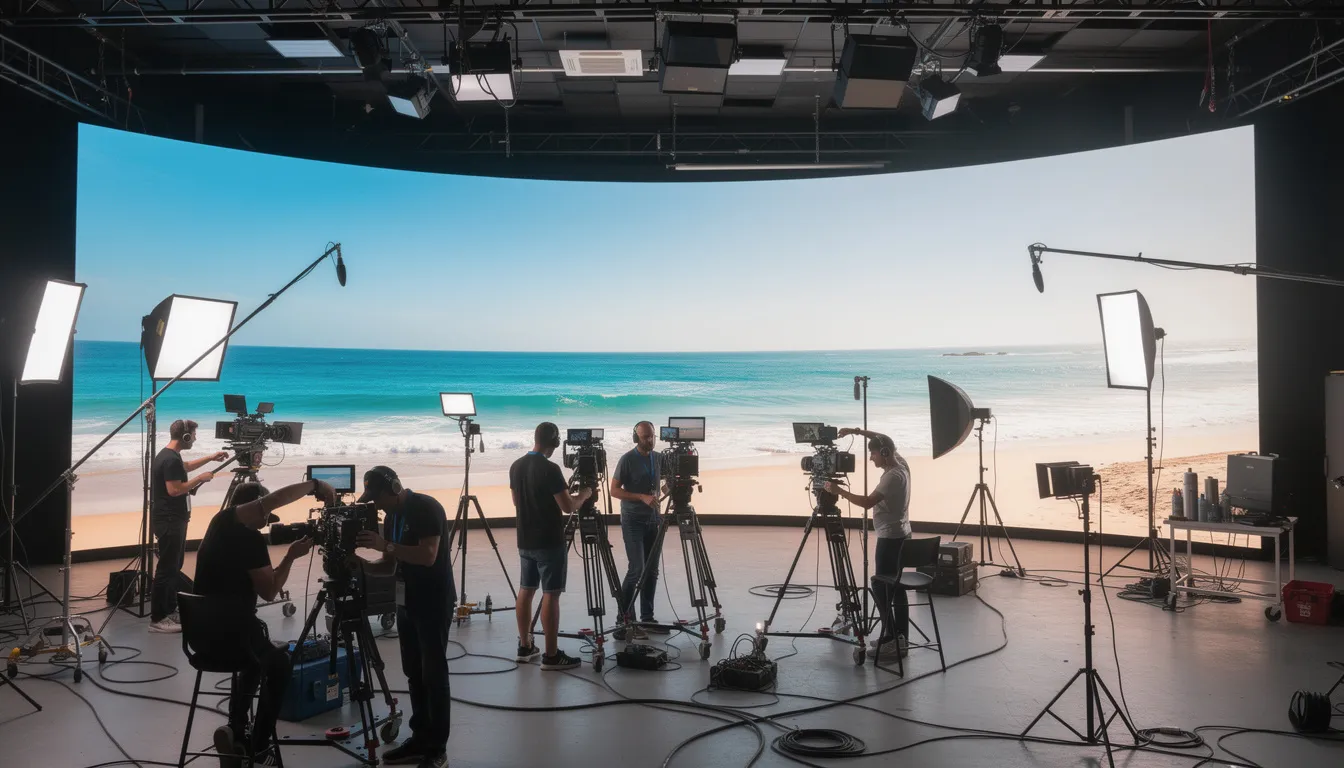
Strategic production planning transforms a single shoot day into a year’s worth of content across several marketing channels. The key lies in pre-production preparation that accounts for every potential use case before cameras roll.
Strategic Production Planning Process
Multi-channel planning begins weeks before the shoot day, not during post production when options become limited.
-
Audit all potential marketing channels and document their specific video requirements—aspect ratios, durations, file format specifications, and content styles. Include internal channels like employee training platforms alongside external marketing channels.
-
Map content types to channels by identifying which channels need testimonials, which need product demonstrations, which need social clips, and which need longer-form content. A single interview can yield a 2-minute testimonial for your website, a 30-second clip for paid advertising, and multiple 15-second cuts for social media.
-
Plan multi-format capture by designing shots for different aspect ratios simultaneously. Position subjects with framing that works in both 16:9 (YouTube, TV) and 9:16 (TikTok, Instagram Stories). Wide establishing shots enable reframing during the editing stage.
-
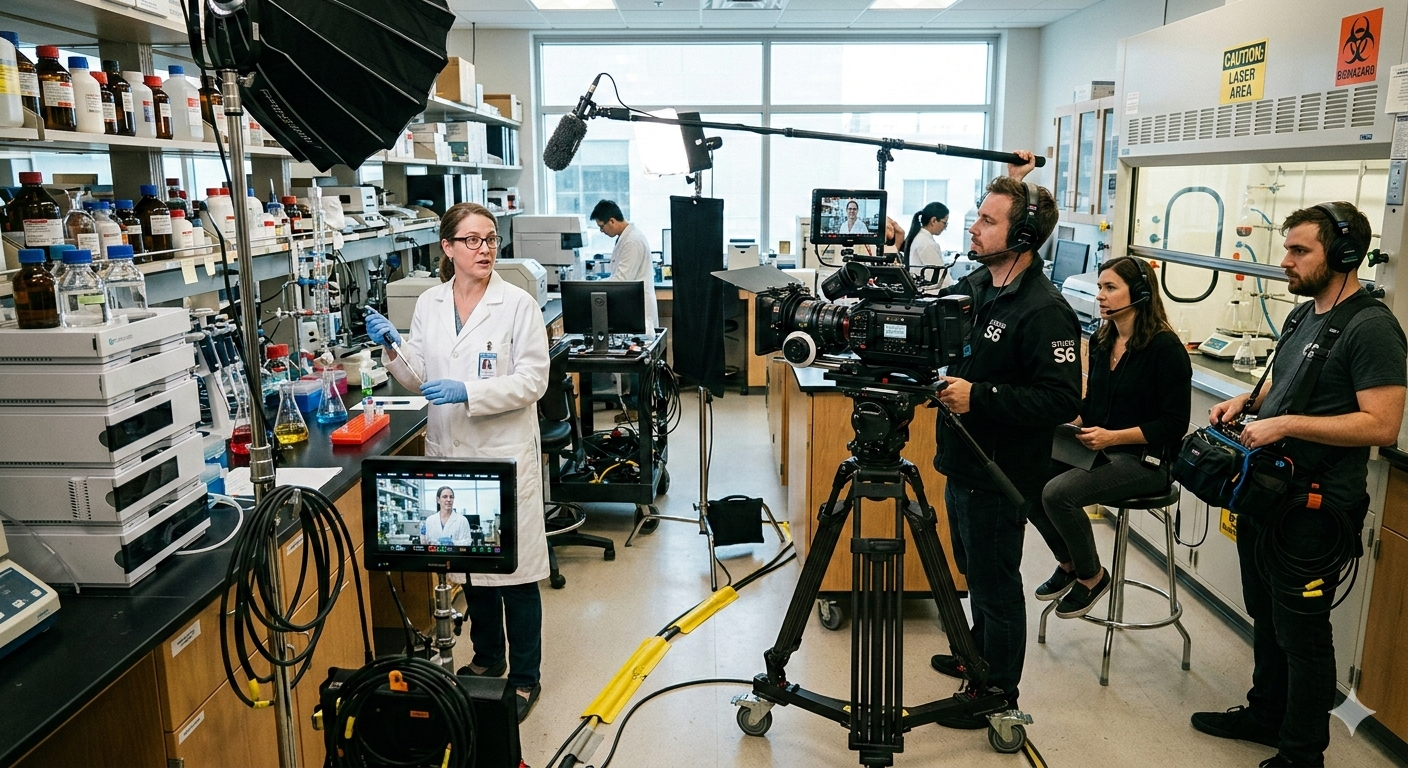
Coordinate logistics for efficiency by scheduling locations, talent, wardrobe changes, and equipment setups to minimize downtime. A well-planned day might capture executive interviews in the morning, employee training demonstrations before lunch, customer testimonials in the afternoon, and b-roll footage throughout.
-
Create comprehensive shot lists that specify variations needed: wide shots for broadcast, medium shots for digital platforms, close-ups for web content, and vertical framing for social media platforms. Include b-roll that works across multiple channels.
-
Plan post production workflow to deliver video files optimized for each channel’s specifications. This includes aspect ratio variations, duration cuts, subtitle additions for sound-off viewing, and appropriate video compression for each platform.
Channel Requirements Comparison
|
Channel Type |
Video Length |
Aspect Ratio |
Resolution |
File Format |
|---|---|---|---|---|
|
Broadcast TV |
15-60 seconds |
16:9 |
1920×1080 |
MP4/MOV |
|
Instagram Stories/Reels |
15-90 seconds |
9:16 |
1080×1920 |
MP4 |
|
|
3 minutes max |
16:9 or 1:1 |
1280×720 |
MP4 |
|
YouTube Ads |
6-15 seconds (skippable) |
16:9 |
1920×1080 |
MP4/MOV |
|
Digital Billboards |
8-10 seconds |
16:9 |
1920×1080 |
MP4 |
|
TikTok |
15-60 seconds |
9:16 |
1080×1920 |
MP4 |
|
Email Thumbnails |
N/A (image link) |
16:9 |
1280×720 |
JPEG/PNG |
|
Website/Landing Pages |
1-3 minutes |
16:9 |
1920×1080 |
MP4 |
When interpreting these specifications, note that shooting at the highest common resolution (1920×1080 minimum) preserves options for all channels. MOV files from professional cameras convert easily to MP4 for web distribution. AVI and Windows Media Video (WMV) formats remain viable for internal distribution but require conversion for most digital channels. Flash Video (FLV) format, once common for web playback via Flash Player, has been deprecated in favor of MP4 across popular web browsers.
Planning with these requirements in mind ensures your production day generates assets ready for every channel your marketing strategy requires.
Common Challenges and Solutions
Video content distribution across multiple channels presents predictable obstacles. Anticipating these challenges during planning prevents costly reshoots and missed opportunities.
Budget Constraints for Multi-Channel Production
Many businesses assume multi-channel video requires multiple production days, multiplying costs proportionally.
Solution: Plan comprehensive shoot days that capture content for all marketing channels simultaneously. By consolidating locations, talent, and crew into efficient production days, the per-video cost drops dramatically. A single day capturing testimonials, training content, social clips, and advertising b-roll costs far less than four separate production days.
Inconsistent Brand Messaging Across Channels
Different team members managing different channels often create fragmented brand experiences when they lack unified source material.
Solution: Develop a unified creative brief that maintains brand voice, visual standards, and core messaging while allowing format adaptation for each channel’s audience expectations. Capture master content during production that provides consistent source material for all channel adaptations.
Technical Format Requirements Overwhelming
The matrix of video file formats, aspect ratios, durations, and codec requirements across digital platforms intimidates many marketing teams.
Solution: Work with experienced video production teams who understand channel specifications and can deliver optimized content for each platform. During production, ensure capture at maximum quality settings to preserve editing flexibility. Create a technical requirements document during pre-production that guides both shooting and post production decisions.
Measuring Performance Across Different Channels
Each channel reports metrics differently, making unified performance assessment difficult. YouTube measures watch time, social media emphasizes engagement, and paid advertising tracks conversion rates.
Solution: Establish channel-specific KPIs appropriate to each platform’s role in your marketing strategy. Brand awareness channels should be measured on reach and view-through rates; engagement channels on shares and comments; conversion channels on click-through and conversion rates. Unified tracking through UTM parameters and attribution modeling connects channel performance to business outcomes.
These challenges become manageable obstacles rather than insurmountable barriers with proper planning and experienced execution.
Optimization and Improvement of Video Distribution Strategies
Optimizing your video distribution strategy is an ongoing process that requires careful analysis, technical refinement, and a willingness to adapt to changing audience behaviors. By leveraging data from various marketing channels—including digital channels like email marketing, paid advertising, and social media platforms—you can identify the best marketing channels for your business and ensure your video content delivers maximum impact.
One of the most effective ways to enhance your video distribution is by improving video quality, audio data, and file format. Choosing the right video file formats, such as MP4, AVI, or MOV, ensures compatibility across multiple channels and devices, providing a seamless viewing experience for your target audience. High-quality audio and crisp visuals are essential for capturing attention and conveying your message clearly, whether your video is viewed on a website, landing page, or social media feed.
Video editing and compression techniques play a crucial role in preparing your content for distribution. By optimizing file size without sacrificing video quality, you make it easier to share videos across digital marketing channels, reduce load times, and improve accessibility for users on different devices and internet connections. Efficient video compression is especially important for email marketing and social media, where large files can hinder performance and engagement.
Post production enhancements, such as adding subtitles and metadata, further improve the accessibility and discoverability of your video content. Subtitles make your videos more inclusive for viewers with hearing impairments and those watching without sound, while metadata helps search engines and social platforms categorize and surface your content to the right audience. These small but impactful adjustments can significantly boost engagement and conversion rates across multiple channels.
To maximize reach, businesses should leverage a mix of digital and traditional marketing channels. In addition to digital platforms like YouTube, social media, and email marketing, consider the power of word of mouth, flash player integrations, and even QR codes in print advertising or at trade shows to drive viewers to your video content. Each channel offers unique opportunities to connect with new customers, promote products and services, and build brand awareness.
A data-driven approach is essential for ongoing optimization. Regularly review performance metrics from each channel—such as view counts, engagement rates, and conversion rates—to determine which channels and formats are delivering the best results. Use these insights to refine your marketing strategy, allocate resources to the most effective channels, and continuously improve your video production and distribution processes.
By embracing a holistic approach that combines technical excellence, creative storytelling, and strategic channel selection, your business can ensure its video content stands out in a crowded digital landscape. Whether your goal is to promote products, attract new customers, or strengthen your brand, optimizing your video distribution strategy across multiple marketing channels is key to achieving lasting success.
Conclusion and Next Steps
Strategic channel selection and multi-channel production planning directly determine whether video content investment generates comprehensive returns or limited single-use outputs. The best marketing channels for your business depend on where your target audience consumes content, what actions you want them to take, and how your content fits each platform’s consumption patterns.
The central principle remains consistent: plan for distribution before production begins. Every decision during pre-production—shot framing, interview questions, location selection, equipment choices—should reflect the full range of channels where content will eventually appear.
Immediate action steps:
-
Audit your current video content distribution to identify which marketing channels you’re using and which remain underutilized
-
Document the technical specifications for every channel relevant to your business using the comparison table as a starting point
-
Plan your next video shoot with multi-channel requirements specified in the creative brief and shot list
-
Evaluate whether your current production partners understand multi-channel optimization or whether you need vendors with this expertise
For further exploration, consider developing your video marketing strategy framework and creating production planning systems that institutionalize multi-channel thinking across your organization.
Additional Resources
Video Specification Quick Reference:
-
MP4 with H.264 codec works across virtually all digital channels
-
Shoot at 1920×1080 minimum; 4K when budget allows for maximum reframing flexibility
-
Capture audio at 48kHz sample rate for broadcast compatibility
-
Include 10% safe margins for text and graphics to accommodate platform cropping
Multi-Channel Production Checklist:
-
[ ] All target channels identified and specifications documented
-
[ ] Shot list includes format variations for each channel
-
[ ] Talent releases cover all intended distribution channels
-
[ ] Post production deliverables specified by channel
-
[ ] Metadata and subtitles planned for each platform
Performance Tracking Framework:
-
Awareness channels: reach, impressions, view-through rate
-
Engagement channels: shares, comments, save rate
-
Conversion channels: click-through rate, conversion rate, cost per acquisition
-
Attribution: UTM parameters, pixel tracking, CRM integration