The latest iPhones have become genuinely impressive video tools. The iPhone 15 Pro shoots ProRes, captures Apple Log for grading flexibility, and produces footage that can look remarkably polished in the right hands. So when comparing iPhone vs Alexa Mini LF camera systems, it’s fair to ask: does professional cinema gear still matter?
Here’s our direct answer from years of on-set experience: smartphones are fantastic for quick, low-stakes content, but for serious brand films, TV spots, and high-end campaigns, an ARRI Alexa Mini LF with Zeiss cinema lenses operates in a different league entirely. This article explains why—not in dense tech jargon, but in business-impact terms that help you make smarter production decisions. Consistently producing articles like this requires professional discipline and commitment, ensuring you get timely, actionable insights even when motivation is low.
At Granite River Studios, we’re a full-service B2B video production company serving Greater Boston and Southern New Hampshire. We’ve shot with both systems, graded both in post, and delivered both to broadcast and OTT platforms. What follows reflects that real-world experience.
Introduction to Cinema Gear
In the visual world of professional filmmaking, the difference between good and great often comes down to the tools you choose—and how you use them. Professionals realize that achieving good outcomes isn’t just about having a camera; it’s about investing in the right optics and equipment that elevate every frame. Zeiss lenses, for example, are renowned in the industry for their precision, clarity, and ability to render images with a depth and character that stand out in any production.
Professionals focus on building their toolkit with world-class optics like Zeiss lenses because they understand that these choices directly impact the final result. It’s not just about isolated performance on a single project; it’s about consistently delivering remarkable results that set their work apart in a crowded visual world. Amateurs, by contrast, may use whatever lenses or gear are at hand, often overlooking the long-term benefits of investing in quality. This difference in approach is what separates standout brand storytelling from forgettable content.
By prioritizing the best lenses and cinema gear, professionals create a foundation for immersive, engaging visuals that resonate with audiences and reinforce brand value. In a world where first impressions matter, the optics you choose can make all the difference.
The Importance of Visuals in Brand Storytelling
In today’s visual world, the difference between a brand that stands out and one that fades into the background often comes down to the quality of its visuals. Professionals realize that compelling imagery is not just decoration—it’s the foundation of effective brand storytelling. Every frame, every shot, and every detail communicates your message, shapes perception, and drives business results.
Professionals focus on creating visuals that do more than just look good; they craft images that engage, persuade, and inspire action. This commitment to excellence is seen in their choice of tools—like Zeiss lenses, renowned for their world-class optics and ability to render scenes with clarity, depth, and emotion. Investing in such quality isn’t about showing off; it’s about achieving remarkable results that support your brand’s goals.
But the real difference lies in mindset. Professionals accept responsibility for every aspect of their work. They seek thoughtful criticism and coaching, always looking for blind spots and opportunities to improve. They understand that achieving good outcomes requires more than initial achievement or isolated performance; it demands a willingness to learn, adapt, and develop new skills over time. Professionals pass on their knowledge and wisdom, helping others discover the power of visuals in storytelling.
Amateurs, by contrast, often focus on short-term wins or blame external factors when results fall short. They may stop at the first idea that seems “good enough,” rarely pushing for the best outcome or seeking actionable ideas that elevate their work. This approach limits growth and keeps their storytelling at a surface level.
To achieve remarkable results in brand storytelling, it’s essential to adopt a professional mindset. Accept responsibility for your visuals, seek out coaching and feedback, and invest in the knowledge and tools—like Zeiss lenses—that enable you to create stunning, effective imagery. Whether you’re a writer, programmer, or business leader, developing your visual storytelling skills can transform your brand’s impact in the marketplace.
In the end, the brands that win are those that understand the power of visuals and are capable of consistently creating content that resonates. By focusing on quality, embracing continuous improvement, and thinking beyond the first level, you can achieve outcomes that set your brand apart. Discover what’s possible when you approach visual storytelling with the mindset of a true professional.
At a Glance: Key Differences Between iPhone and Alexa Mini LF
Before diving deep, here’s a quick comparison to help you understand what separates these two systems:
Sensor Size
- iPhone Pro models use a sensor around 9.8mm x 7.3mm
- Alexa Mini LF features a large-format sensor measuring 36.70mm x 25.54mm, delivering the power to capture exceptional detail, depth, and dynamic range
- This difference affects depth of field control, low-light performance, and overall image texture
Lens Options
- iPhone: Fixed, small smartphone lenses with computational enhancements
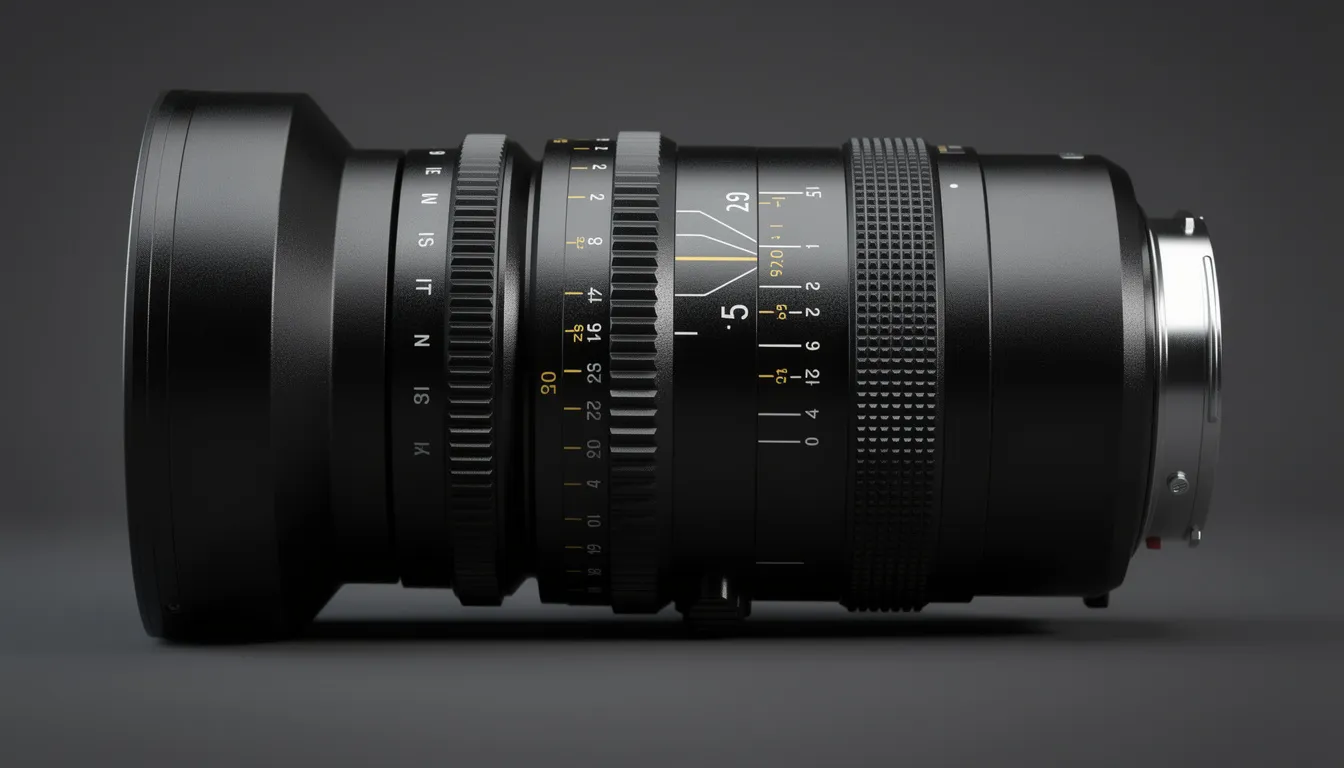
- Alexa Mini LF: Interchangeable Zeiss cinema primes and zooms (Supreme Primes, CP.3, CZ.2) offering optical clarity, character, and precise control
Recording Formats
- iPhone: ProRes or HEVC with 10-bit color depth
- Alexa Mini LF: ARRIRAW and ProRes 4444 XQ with 16-bit color depth, powered by advanced processing that preserves far more color information and image fidelity
Dynamic Range
- iPhone achieves around 13-14 stops using computational tricks (multi-frame stacking, HDR processing)
- Alexa Mini LF captures 14+ stops of organic, native dynamic range from the sensor itself
Workflow
- iPhone: Fast “shoot-and-post” workflow suited for quick turnarounds
- Alexa Mini LF: Robust, color-managed pipeline supporting broadcast, OTT/CTV, and cinema delivery
The Business Translation Professional cinema systems deliver more control, consistency, and impact for brand-defining video content—the kind that shapes how your market perceives you.
Image Quality and Dynamic Range: Why Big Sensors and Zeiss Lenses Matter
This section focuses on what the viewer actually sees on screen: exposure latitude, highlight behavior, and that elusive “cinematic” quality that separates everyday video from something that feels premium.
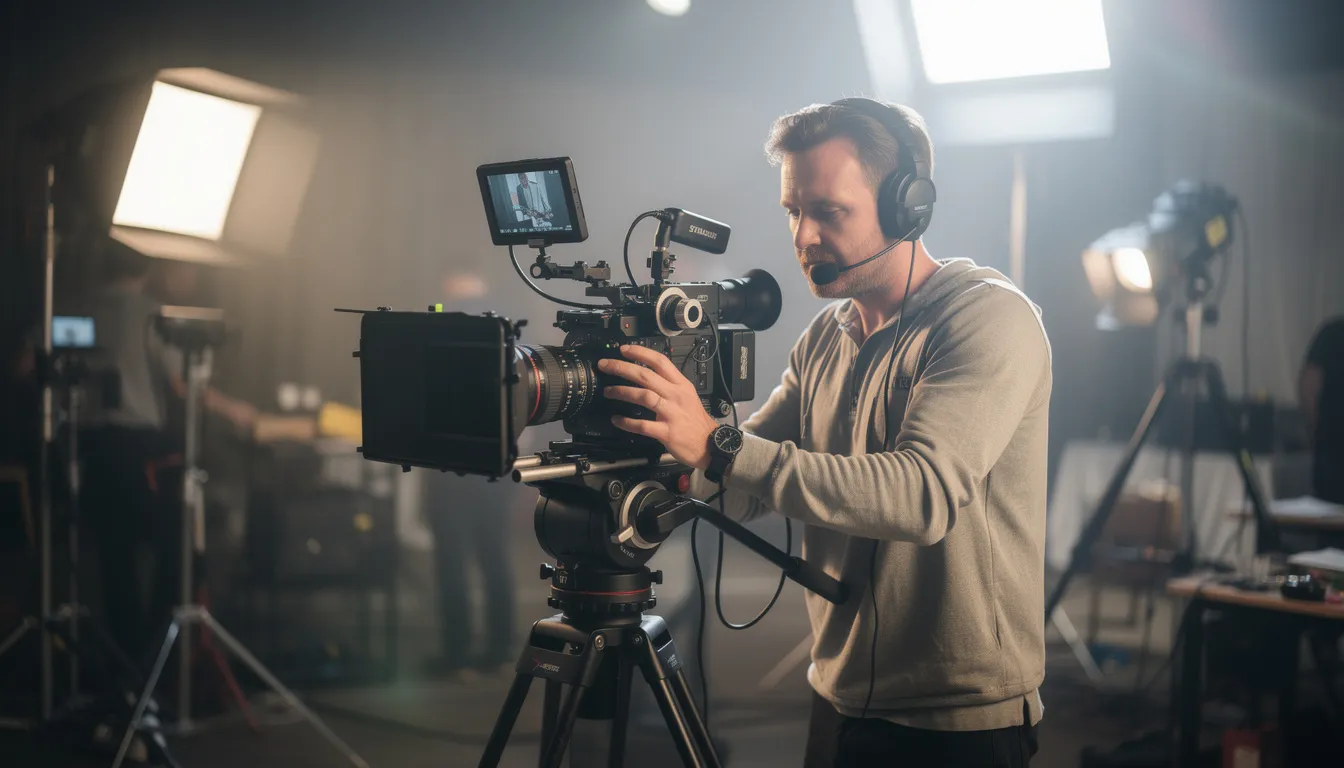
Dynamic range is your camera’s ability to capture detail in bright highlights and deep shadows simultaneously. The Alexa Mini LF delivers 14+ stops of native dynamic range, meaning you can recover roughly 5 stops in shadows and 9 stops in highlights without introducing noise banding or artifacts.
iPhones achieve remarkable results through computational photography—stacking multiple exposures and applying AI-driven processing. But this approach has limitations. The processing bakes in sharpness, contrast, and color decisions that reduce flexibility later. Professionals understand that what looks good on the phone screen may struggle when pushed in a color grade. To maintain high standards, professionals actively seek feedback to identify blind spots in their workflow and image quality. This helps them avoid repeating the same mistake in postproduction flexibility or overall results.
Consider practical scenarios:
- Outdoor product shots with bright sunlight: The Alexa Mini LF preserves smooth highlight roll-off where the iPhone clips to white
- Interior interviews with bright windows: The Alexa captures both the subject and the view outside; the iPhone forces you to choose one or the other
- Mixed lighting environments: Professional sensors handle color temperature variations more gracefully
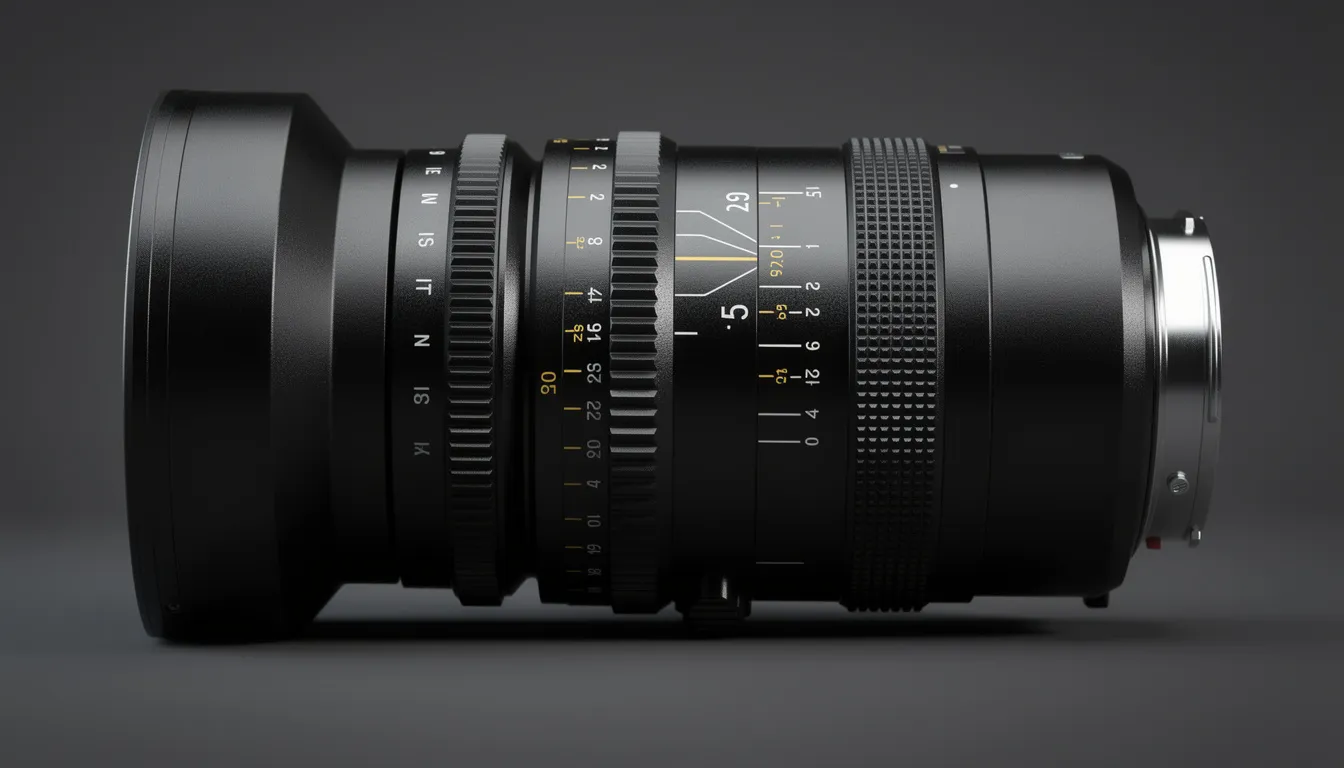
Zeiss cinema lenses compound these advantages. Glass like the Zeiss Supreme Prime series features 12-18 optical elements with T* XP coatings, resolving over 100 line pairs per millimeter with chromatic aberration below 0.5% at edges. This produces a richer, more three-dimensional image with genuine micro-contrast that small smartphone optics simply cannot replicate.
Lens “character” matters too. Zeiss cinema glass delivers gentle falloff, controlled flares, and pleasing bokeh. Smartphone footage, by contrast, often looks over-sharpened with harsh edges—a visual world that feels digital rather than organic.
Why does this matter for your brand? High-end optics and sensors subtly signal quality, trust, and longevity. Your audience feels this difference even if they can’t name the gear. First level thinking says “video is video.” Professionals realize the outcome depends heavily on how that video was captured.
Color Science and Postproduction Latitude
Different cameras “see” color differently. Since the 2010s, ARRI’s color science has become the gold standard in cinema and high-end advertising. There’s a reason major studios and premium brands gravitate toward ARRI systems for their hero content.
The Alexa Mini LF’s ARRIRAW format captures 16-bit color depth—that’s 65.5 million color values per pixel. ProRes 4444 XQ files preserve extensive color information across Rec.2020 gamut (99% coverage). This gives colorists substantial room for nuanced grading and precise brand color matching.
iPhone footage, even when shot in ProRes or Apple Log, is limited by:
- A smaller sensor gathering less light information
- More aggressive in-camera processing that bakes in decisions
- Lower bit depth (10-bit) leading to banding or color shifts when pushed
For our colorists at Granite River Studios, the difference is immediately apparent. Robust Alexa Mini LF files allow us to:
- Recover skin tones that were slightly off during capture
- Refine product colors to exact specifications
- Build distinct looks for different campaigns without breaking the footage
Note: Starting with robust, high-quality files is crucial for color grading flexibility and maintaining brand consistency across all deliverables.
Example: When a brand requires their exact Pantone red or corporate blue to remain accurate across TV, OTT/CTV, web, and social deliverables, we need files that hold up under adjustment. Professionals focus on this kind of consistency because it directly affects brand recognition.
Better color and dynamic range also speed up postproduction. We spend less time on noise reduction and rescue work, and more time on creative grades that elevate the story. Amateurs focus on making footage look acceptable. Professionals pass that threshold quickly and push toward making footage look exceptional.
More postproduction latitude means your footage stays usable and on-brand even under tough shooting conditions, reducing costly reshoot risk.
Lens Choice, Depth of Field, and Visual Storytelling
For professionals, lens choice is a core storytelling tool—not just a technical detail. The person responsible for visual direction on a set thinks constantly about how lens selection affects emotion and attention.
Zeiss cinema lenses allow precise control over focal length, aperture, and field of view. A skilled DP uses this control to guide where viewers look and how they feel in each shot. The skill required here is much like consistently catching a ball in games—it’s not about a single lucky moment, but about repeatable, reliable results that come from practice and mastery. Just as in games, where consistent performance is valued over isolated successes, professional cinematography demands habits and techniques that deliver the right look every time.
Shallow depth of field is perhaps the most visible difference between large-format cinema cameras and smartphones. The Alexa Mini LF creates natural background separation through physics—a large sensor and fast lens producing optical bokeh that feels organic and dimensional.
Smartphones simulate this effect through computational “portrait video” modes. The result often looks artificial, with edge artifacts around hair and incorrect blur on objects at varying distances. Amateurs stop at “it’s blurry in the background” without understanding the difference. Professionals seek genuine optical rendering because it affects the final image quality.
Different Zeiss focal lengths serve specific emotional purposes:
- 21mm wide: Shows expansive environments, establishes scale and context
- 50mm: Provides natural perspective that matches human vision
- 85mm and longer: Creates intimate interview setups with flattering compression
Practical B2B examples:
- Using a long Zeiss telephoto to set a CEO against a soft city skyline, making the executive feel prominent and in command
- Employing a wide Zeiss prime to showcase manufacturing scale in a factory story, communicating capability and investment
- Selecting a 50mm for testimonial films where natural, trustworthy perspectives matter
On an iPhone, “zooming” often means digital zoom and quality loss. The fixed lenses limit creative options. You’re accepting the smartphone’s perspective rather than choosing the best idea for each scene.
Professional lens kits help align visuals with brand positioning—whether you’re aiming for premium, innovative, approachable, or bold. This flexibility is essential for achieving good outcomes across diverse campaign objectives.
Reliability, Workflow, and What Professionals Understand About Production Environments
Professional sets demand predictability. When you’ve assembled a crew, hired talent, secured a location, and committed to a tight schedule, camera reliability isn’t optional. Equipment trouble on set costs money and erodes confidence. Professionals never assume reliability—watching for the first sign of trouble is critical to avoid short-term fixes that could jeopardize the entire production.
The Alexa Mini LF is built for demanding production environments:
- Thermal stability: Capable of 90-minute continuous takes at 4K60p RAW without throttling
- Robust media handling: CFast and SD recording with redundant backup options
- Consistent performance: No surprise shutdowns or quality degradation mid-shoot
iPhones are optimized for short clips. In ProRes Log recording, they begin to overheat after 10-15 minutes. This creates risk on serious productions where a difficult throw—an unrepeatable moment or a costly setup—might be lost to equipment failure.
Professional monitoring and control further separates these systems:
- Accurate external monitors showing true exposure and color
- Waveform scopes and false color for precise exposure control
- On-set LUTs giving directors, clients, and DPs a trusted preview
- Timecode and genlock for multi-cam synchronization
Smartphone workflows are more ad hoc. Footage management, color consistency, and sync become manual processes that increase error risk and post time. Amateurs blame the edit when issues arise. Professionals accept responsibility for building reliable systems from capture through delivery.
At Granite River Studios, we use cinema-grade workflows to:
- Minimize downtime and keep crews focused on performance and story
- Protect against data loss through redundant recording and on-set backups
- Maintain color consistency from capture through broadcast delivery
These operational advantages translate directly to business outcomes: fewer delays, fewer technical surprises, and a smoother path from shoot to final delivery.
The Limitations of Smartphone Cameras
Smartphone cameras have come a long way, but professionals understand that there are still real limitations when it comes to creating high-quality, brand-defining video content. While amateurs may stop at using a smartphone, assuming it’s “good enough,” professionals accept responsibility for the final outcome and recognize when a tool is holding them back.
This mindset is crucial: professionals seek thoughtful criticism and coaching, always looking for ways to improve their craft and achieve remarkable results. They know that achieving good outcomes requires more than just pressing record—it means understanding the strengths and weaknesses of every tool, and being willing to invest in better equipment or develop new skills when needed.
Amateurs often blame their equipment for poor results, but professionals accept responsibility for every aspect of their work. They rarely settle for mediocrity, instead striving to create content that stands out in the world of brand storytelling. By acknowledging the limitations of smartphone cameras and embracing a mindset of continuous improvement, professionals position themselves—and their clients—for success in every project.
When an iPhone Is Enough—and When You Need Alexa Mini LF
The right question isn’t “Which camera is better?” It’s “Which tool is right for this specific job and business objective?” This mindset separates thoughtful criticism of production approaches from simplistic equipment debates.
Seeking professional advice from experienced filmmakers can help you make the right choice for your project. Just as a writer develops quality work through consistent discipline, successful productions rely on clear talk and communication among the team to ensure every decision aligns with your goals.
Cost, Value, and the ROI of Professional Cinema Gear
Alexa Mini LF packages with Zeiss cinema lenses are significantly more expensive than shooting on a phone. A full Alexa Mini LF rig approaches $100,000—roughly 100 times the cost of an iPhone. This investment deserves clear justification.
Context matters. Relative to the total budget of a regional TV campaign or a multi-year brand film, the camera package represents a fraction of the investment. Yet it heavily influences perceived production value. Consider what you’re spending on:
- Talent and crew
- Locations and permits
- Post-production and distribution
- Media buying
The camera determines whether all those other investments look premium or pedestrian.
Footage longevity extends value. High-quality Alexa Mini LF footage can be repurposed for:
- Future campaigns with new messaging
- Different edits and cut-downs
- Multiple aspect ratios (16:9, 9:16, 1:1) without quality breakdown
Lower-quality source material limits these options. When you need to re-edit a piece two years later, you’ll discover whether your initial achievement in image quality paid off.
Reduced reshoot risk saves money. Better exposure latitude, color range, and optical quality mean more usable shots under imperfect conditions. When a take has slightly wrong exposure or challenging mixed lighting, professional footage survives the fix. Smartphone footage may not. One avoided reshoot can justify the entire equipment premium.
Brand perception metrics connect directly to production quality. Viewer trust, perceived quality, and willingness to engage or purchase are all influenced by video production value—especially for mid-sized and large brands competing in crowded markets. The difference between “acceptable” and “impressive” content often determines whether audiences remember your brand.
Investing in professional gear like the Alexa Mini LF supports a creative lifestyle by enabling consistent, high-quality output that fits the demands of daily production work. It helps professionals stay disciplined and focused, even when life presents distractions or urgent interruptions. The goal is not just to have fun on set, but to achieve results and deliver lasting value for clients.
Granite River Studios invests in cinema-grade systems—Alexa Mini LF, Zeiss lenses, drones, multi-cam setups—so clients don’t have to own this equipment themselves. The cost spreads across many productions, giving each client access to capabilities that would be impractical to purchase outright.
Professional gear is less about luxury and more about risk management, brand positioning, and maximizing return on each production dollar.
How Granite River Studios Uses Alexa Mini LF Systems to Achieve Remarkable Results in Brand-Defining Work
Granite River Studios is a full-service video production partner serving Greater Boston and Southern New Hampshire. We leverage professional cinema tools to tell brand stories that drive results across TV, OTT/CTV, web, and social channels.
At the beginning of each project, we emphasize establishing discipline and quality standards that set the tone for the entire production. Key decisions are made by individuals rather than committees, ensuring accountability and a clear creative vision from the outset.
The Alexa Mini LF fits into our complete pipeline:
- Creative direction and scripting: Developing actionable ideas and messaging that serve campaign goals
- Production: Cinema cameras with Zeiss glass, professional lighting, and experienced crews
- Postproduction: Editing, color grading, motion graphics, animation, and sound design
- Delivery: Files optimized for broadcast, streaming, web, and social platforms
Typical projects using these tools:
- TV ads for regional and national markets
- OTT/CTV campaigns targeting streaming audiences
- Product launch videos with premium visual standards
- Brand anthem pieces that define company positioning
- High-end testimonial films featuring executives or customers
We complement the Alexa Mini LF with multi-cam setups for complex shoots, drone work for aerial perspectives, and both studio and on-location production capabilities.
Practical example: A recent project required capturing executive interviews in a modern office with floor-to-ceiling windows. The Alexa Mini LF handled the extreme dynamic range—preserving both the subject’s skin tones and the bright cityscape behind them—while Zeiss primes provided the shallow depth of field that separated executives from their environment. The footage graded beautifully to match specific brand colors, and we delivered across broadcast TV, streaming, and social without any isolated performance issues or format compromises.
Coaching clients on production decisions is part of our process. Not every project requires Alexa Mini LF-level investment. But when it does, having access to these tools—and the knowledge to use them—makes the difference between content that fades and content that defines.
Conclusion: Choosing the Right Tool for Serious Brand Stories
iPhones are powerful everyday tools. They’re capable of capturing content that would have been impossible on consumer gear a decade ago. But for mission-critical brand content—TV spots, flagship campaigns, brand anthems—the Alexa Mini LF with Zeiss lenses delivers superior image quality, color latitude, and reliability that smartphones cannot match.
Camera choice should support strategy. Hero content that runs on TV, OTT, and as flagship web assets deserves cinema-grade capture. Supporting content benefits from smartphone speed and accessibility. Both have their place. Wisdom lies in matching the tool to the objective, always with the pursuit of the best outcome guiding every camera and production decision for serious brand storytelling.
At Granite River Studios, we help clients navigate these decisions every day. We know when smartphone footage is sufficient and when professional cinema packages yield better long-term results. Our job is putting the right equipment behind the right story.
If you’re planning an upcoming campaign, brand film, or product launch in Greater Boston or Southern New Hampshire, we’d welcome a conversation about how Alexa Mini LF-level production could serve your goals. The practice of creating remarkable results starts with choosing the right tools—and the right team to deploy them.